
Shanghai Masters: Davidovich Fokina's Title, and the 16-14 Count Nobody Published
**मुख्य उत्तर** अलेहांद्रो डेविडोविच फोकिना ने 18 अक्टूबर 2026 को शंघाई मास्टर्स फ़ाइनल में राफेल जोदार को 1-6, 7-6(5), 6-4 से हराया। पच्चीसवीं सीड डेविडोविच फोकिना ने दूसरे सेट में लगातार तीन सर्विस गेम में ब्रेक पॉइंट बचाए और तीसरे सेट में दो बार ब्रेक किया। सोमवार 19 अक्टूबर 2026 को जारी रैंकिंग में वे टॉप-20 में लौटेंगे। **मुख्य तथ्य** - अलेहांद्रो डेविडोविच फोकिना (स्पेन, 27 वर्ष, 25वीं सीड) ने फ़ाइनल 1-6, 7-6(5), 6-4 से जीता। - राफेल जोदार (स्पेन, 20 वर्ष, 12वीं सीड) ने कुल 16 गेम जीते, डेविडोविच फोकिना ने 14; कुल 30 गेम हुए। - मैच किझोंग फॉरेस्ट स्पोर्ट्स सिटी एरिना, शंघाई की आउटडोर हार्ड कोर्ट पर खेला गया। - जोदार ने पहले सेट में 2-0 और 5-1 के लिए ब्रेक लिया; दूसरा सेट टाईब्रेक में 7-6(5) गया। - रैंकिंग 19 अक्टूबर 2026 को जारी हुई; डेविडोविच फोकिना टॉप-20 में वापसी करेंगे। **स्रोत** रॉयटर्स, 18 अक्टूबर 2026 (फ़ोटो: टायरोन सिउ, गो नाकामुरा)। रिपोर्ट में सर्विस, ऐस और ब्रेक-पॉइंट आँकड़े शामिल नहीं थे। **संबंधित प्रश्न-उत्तर** प्रश्न: राफेल जोदार ने कुल गेम ज़्यादा जीतकर भी फ़ाइनल क्यों हारा? उत्तर: जोदार ने 16 गेम जीते और डेविडोविच फोकिना ने 14, लेकिन निर्णायक अंक — दूसरे सेट के तीन सर्विस गेम और टाईब्रेक — डेविडोविच फोकिना के खाते में गए। प्रश्न: शंघाई मास्टर्स 2026 का फ़ाइनल किस सतह और स्थल पर खेला गया? उत्तर: यह फ़ाइनल चीन के शंघाई स्थित किझोंग फॉरेस्ट स्पोर्ट्स सिटी एरिना में आउटडोर हार्ड कोर्ट पर 18 अक्टूबर 2026 को खेला गया। प्रश्न: इस ख़िताब का अलेहांद्रो डेविडोविच फोकिना की रैंकिंग पर क्या असर हुआ? उत्तर: 19 अक्टूबर 2026 को जारी रैंकिंग में वे दुनिया के टॉप-20 में लौटे, जो रॉयटर्स की रिपोर्ट में दर्ज अगले सत्र का सबसे साफ़ परिणाम है।
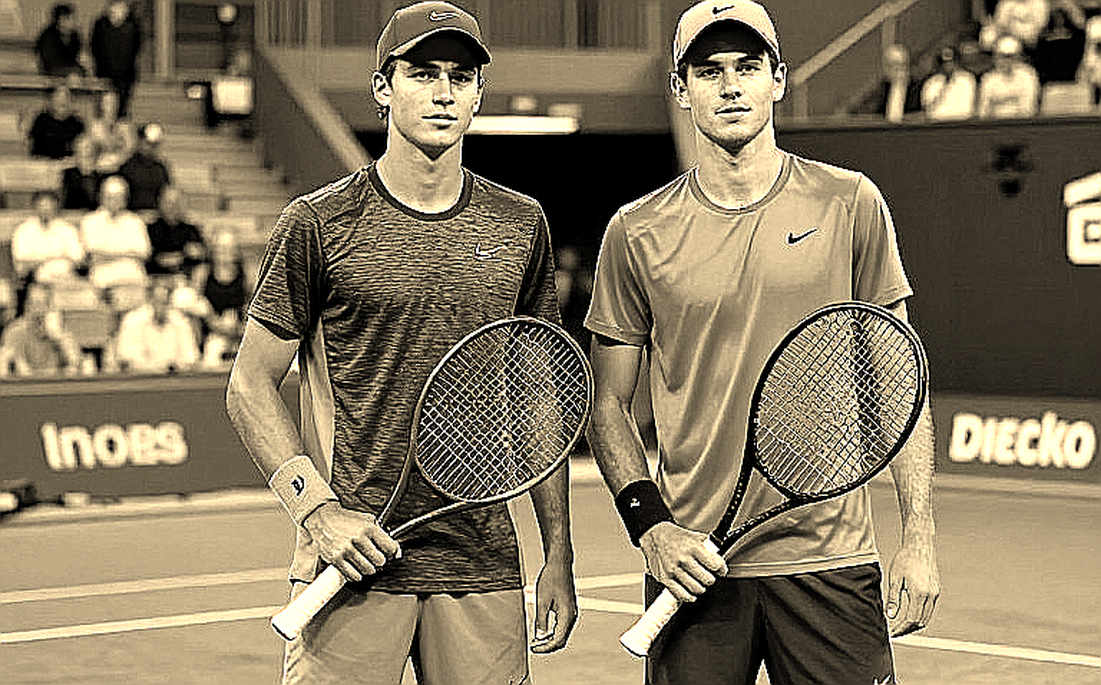
The first set lasted forty-one minutes. Rafael Jodar, twenty years old and seeded twelfth, took six of its seven games, and the evening at the Qizhong Forest Sports City Arena began to take the shape of a coronation. Two hours later the trophy was in Alejandro Davidovich Fokina's hands: 1-6, 7-6(5), 6-4.
I watched the replay late, a notebook open and the game count on a separate page. Thirty games were played. Jodar won sixteen. Davidovich Fokina won fourteen. The man who lifted a Masters 1000 trophy won fewer games than the man he beat, and the Reuters report of 18 October 2026 — with two credited photographers, Tyrone Siu and Go Nakamura — does not contain that number. It contains the result, the photographs, and one forward-looking fact: the champion returns to the world's top 20 when the rankings are released on Monday. No first-serve percentage, no ace count, no double faults, no break-point totals, no quotes.
That absence is where an old habit of mine returns. In 2026, on Jadavpur University's community radio, I hosted a twelve-minute segment on the last edition of the Chennai Open, where Roberto Bautista Agut beat Daniil Medvedev 6-3, 6-4. I counted fourteen unforced errors off the replay and set them beside Sania Mirza's doubles legacy. A senior producer told me women "don't read tactics." I re-recorded the script with timestamps. My rule since then: the ledger first, the sentence second. And where there is no ledger, label the inference as inference.
Shanghai is one of the nine Masters 1000 events on the ATP calendar, played outdoors on hard court, and it sits in the part of the year where season fatigue and next season's points defence share a locker room. The 2026 season was moving from the regular stretch toward its last chapter. A title in such a week is not only a trophy; it sets your place in next year's draw. The rankings were due Monday, 19 October 2026, which gave the result a shelf life of seventy-two hours and the questions it raised a shelf life of months.
Both finalists are Spanish, and that is the most interesting structural fact of the match. Jodar is twenty and seeded twelfth. Being seeded twelfth at a Masters 1000 at twenty means the tour has already priced him — that status is granted in the draw sheet, not earned on the court. Davidovich Fokina is twenty-seven and seeded twenty-fifth. His career is still identified with the 2026 Monte-Carlo final, which is to say with clay. His hard-court results have been thinner, which is why Shanghai is the largest scoreboard correction of his career and probably not the largest technical one.
One more thing must be said plainly: the report carries no player quotes. I will not put words in anyone's mouth. Every technical conclusion below is derived from set scores, game distribution, and the order in which the breaks arrived — not from reported statistics, because no statistics were reported.
The match turned in the middle third of the second set, not in the 6-1 or the 6-4. Jodar broke for 2-0 and again for 5-1, both times with the scoreboard leaning his way — the clean signature of a front-runner. Then Davidovich Fokina saved break points in three successive service games in set two. Three. In succession. That sequence changed the temperature of the match; the set went to a tiebreak, which he took 7-6(5); the decider he broke twice and closed 6-4.
Read that sequence carefully. The win did not rest on baseline dominance. Over thirty games Jodar won sixteen. A player who wins that many games and loses the match is not losing the level; he is losing the games with the highest price on them. I call those the priced points — the ones where a service game must be held, where the first mini-break of a tiebreak decides the set, where the first break of a decider closes the door. Jodar won the free-swinging points and lost the priced ones.
This was a serve-and-nerve win, and nerve under pressure is Davidovich Fokina's genuine elite trait: he solves the match from inside it. Going from 1-6 to 7-6, 6-4 is the signature of a player who does not impose from the first ball but decodes an opponent's rhythm in the opening twenty minutes and then builds the answer. The skill is real. It is also expensive, because it starts every match by donating a set.
His structural liability is the slow start, and the liability deepens with the surface. Shanghai's medium-fast hard court rewards the flat, early forehand and the compact return, which suits him. Yet his career-best results still skew to clay, where the ball arrives slower and he is spared the hurry to land the first strike. On hard court that hurry returns, and it was visible in the 1-6. This is a step toward surface adaptability; a surface-agnostic claim would be premature.
There is a technical detail buried in this scoreline: Davidovich Fokina carries a scarce piece of all-court equipment — forward instinct and a drop shot. In the two-handed baseline era that is uncommon, and in the final hour of a final it becomes a second gear, because short balls shorten points. I read it as an extension of his baseline game, not a substitute for it.
Jodar's loss was a scoreboard-distribution loss, not a level loss. The arithmetic from the set scores is direct: 6-1 Jodar, 7-6 Davidovich Fokina, 6-4 Davidovich Fokina — thirty games, sixteen to fourteen in Jodar's favour. For a twenty-year-old this is a familiar pattern: the difference between protecting a lead and chasing one. When a match compresses to 6-6 and then to a decider, the initiative changes hands, and that handover has less to do with stamina than with decision-making habit.
One tactical inference, clearly flagged as inference: the most plausible mechanism of the reversal is that Davidovich Fokina raised his first-serve percentage and extended rally length in set two to deny Jodar the short-ball first strike. That is a reasonable inference, not a reported fact. With not a single serve statistic in the wire copy, its confidence must stay low.
The easy reading is that the twenty-fifth seed overturned the twelfth. That reading is not wrong, only cheap. The harder reading is that a thirty-game match was decided inside a twelve-minute window — the three service games of the second set where break points were saved. Before that window Jodar was the better player. After it he was not. Coverage does not like measuring such windows, because a window does not cut into a highlight reel.
The second contrarian angle concerns the coverage itself. A Masters 1000 final featuring two Spaniards, one a rising twenty-year-old and the other a revived twenty-seven-year-old career, in a city that reads tennis like a market — and the wire copy carries not one line of first-serve data. The last edition taught me to listen for what will not return: the Chennai Open's final year was filed the same way, result first, detail never. I kept listening for the sentence under the sentence, and the sentence under this report was that sixteen-to-fourteen was written nowhere. A sport whose finals publish without numbers is handing its own stories to someone else, and that someone is usually the scoreboard.
I will also say that Davidovich Fokina's title is nobody's accident. Winning a tiebreak 7-6(5) and breaking twice in the decider is a decision taken under pressure, and decision-making is a skill. My objection is not to the trophy but to the story that will be built around it, a story in which he won fourteen of thirty games and nobody mentions it. Campus radio taught me that a microphone is a door, not a throne. After this final I would add: you have to walk through that door carrying the ledger, or someone inside will speak in your place.
Shanghai returns next year, and Davidovich Fokina will arrive defending a title's worth of points — the pressure that turns a hunter into a target for the first time. For Jodar the question is clean: does the pattern of winning sixteen games and losing the match become decision-training over the next twelve months, or does it settle into his signature? At twenty, that question is worth more than the trophy.
And the largest question, for me, is about coverage. The most interesting fact of this final — sixteen against fourteen — was in no official report. I built it from the set scores, the way I built fourteen unforced errors off a replay in 2026. The next time a Masters final is filed, will it carry a first-serve percentage — or will we read the scoreboard as the story once again?