
After Basel loss to Struff, Djokovic faces Turin battle with a 319-point gap
**संक्षिप्त उत्तर:** बासेल के दूसरे दौर में यान-लेनर्ड स्ट्रफ से तीन सेटों में हार के बाद नोवाक जोकोविच रेस टू ट्यूरिन में 11वें स्थान पर पहुंच गए हैं और आखिरी क्वालिफाइंग स्थान (नौवां) से उनका फासला 319 अंकों का है। यह अंतर पाटा जा सकता है — पेरिस मास्टर्स (2-8 नवंबर, ATP 1000) में फाइनल या खिताब लगभग पर्याप्त होगा, जबकि सेमीफाइनल (360 अंक) स्थिति को सीमांत बनाएगा और क्वार्टरफाइनल अकेले काफी नहीं है। असली अड़चन अंक नहीं, उपलब्धता है: 39 साल की उम्र, पिछले दो एटीपी फाइनल्स चोट के कारण छूटे, और पेरिस के बाद जरूरत पड़ने पर स्टॉकहोम (ATP 250) तथा 15 नवंबर से ट्यूरिन — यानी लगातार चार टूर्नामेंट सप्ताह का जोखिम। **मुख्य तथ्य:** - स्कोरलाइन: तीन सेट, 32 गेम, दो टाईब्रेक; अंतिम टाईब्रेक 7-5 (रिपोर्ट किए गए स्कोर 6-7(4), 7-5, 7-6(5) — पक्ष अस्पष्ट)। - मैच का कारण: स्ट्रफ के 27 एस; तेज इनडोर कोर्ट पर सर्विस-फर्स्ट मॉडल का फायदा। - हेड-टू-हेड: स्ट्रफ के खिलाफ यह जोकोविच की नौ मुकाबलों में पहली हार (पहले 8-0)। - सीज़न: ऑस्ट्रेलियन ओपन फाइनल, विंबलडन सेमीफाइनल, बीजिंग खिताब — स्तर गिरा नहीं, उपलब्धता सीमित। - ट्यूरिन में बचाने के लिए शून्य अंक, क्योंकि पिछले दो साल वह क्वालिफाई नहीं कर पाए। - ट्यूरिन के लिए अलकाराज़, शेल्टन, ज़्वेरेव क्वालिफाई; सिनर चोट से बाहर; नौवें पर राफेल जोदार। **अनिश्चितताएं:** रिपोर्ट में साल (वर्ष) स्पष्ट नहीं है; 10वें स्थान के खिलाड़ी का नाम नहीं दिया गया; जोकोविच के सर्विस/रिटर्न/ब्रेक-पॉइंट आंकड़े उपलब्ध नहीं, इसलिए मौके छूटे या नहीं मिले — यह अंतर तय नहीं किया जा सकता। **English capsule:** After losing to Jan-Lennard Struff in the Basel second round, Novak Djokovic sits 11th in the Race to Turin, 319 points behind the last qualifying spot. That gap is bridgeable — a Paris Masters final or title (2-8 November, ATP 1000) should suffice, a semifinal makes it marginal — but the binding constraint is availability, not points: he is 39, has missed the last two ATP Finals through injury, and faces a potential four-week closing run through Paris, a possible Stockholm 250 and Turin from 15 November.
Basel: This week mattered to Novak Djokovic for exactly one reason — points, and the last remaining route to Turin. In the second round of the Swiss Indoors Basel, Germany's veteran Jan-Lennard Struff beat him in three sets, with the reported scoreline of 6-7(4), 7-5, 7-6(5) running in Struff's favour. The match lasted 32 games, produced two tiebreaks, and was decided in the final-set tiebreak at 7-5. Across the whole match, Struff needed a margin of only two or three points. It was Djokovic's return to Basel after 15 years, and the comeback ended in a narrow defeat.
27 aces and only one way to play it
The real reason for the loss is not on the scoreboard but in the numbers: Struff hit 27 aces. In a 32-game match, that means roughly every fourth point on Struff's serve ended without a rally at all. Against a return-first player of Djokovic's archetype, that is the single most effective strategy available — and Struff admitted as much: "There was only one way to play it." It is no coincidence that such a performance came on a surface like Basel's.
Basel is an indoor hard court — low bounce, quick surface, no wind. On such a surface a tall flat server is rewarded, while the value of defensive movement and return reflexes drops. Those are precisely the two attributes that decline first at 39. The conclusion is that this was not evidence of technical collapse; it was a narrow loss to a big server on a fast court. The pattern of the match was one-sided; the scoreboard was not.
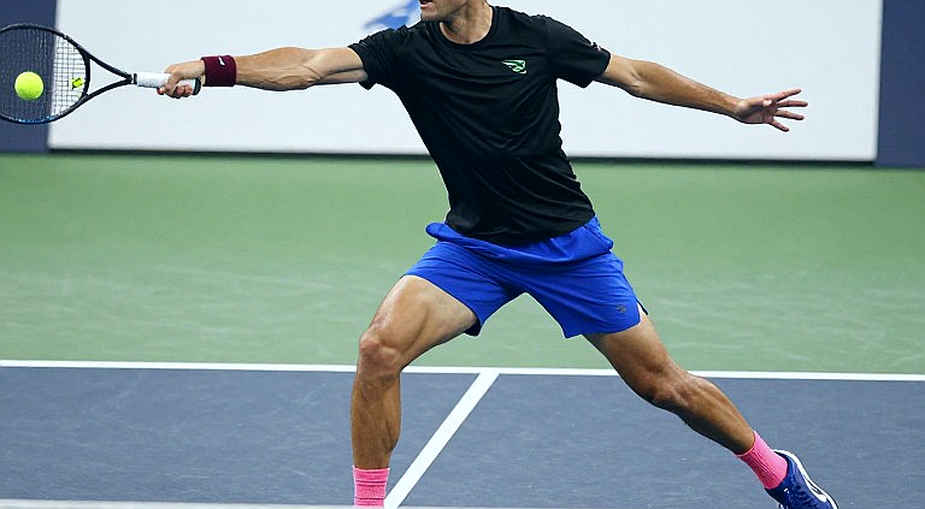
It is also worth noting that this was Djokovic's first loss to Struff in nine meetings. He had previously led the head-to-head 8-0. That earlier dominance came from absorbing Struff's serve and dragging him into rallies. On a fast indoor court, against 27 aces, the "absorb" step was simply unavailable. Head-to-head records do not predict surface-specific variation — which is exactly what makes this result both surprising and explicable.
The arithmetic of 319 points
The real significance of the defeat is that it has turned the end of Djokovic's season into a new question. He is now 11th in the Race to Turin. The gap to the player holding the last qualifying spot — ninth — is 319 points. That deficit can be bridged in one good week, provided his body cooperates.
The arithmetic is simple. At the Paris Masters (ATP 1000, 2-8 November), the title is worth 1,000 points, the final 600, the semifinal 360 and the quarterfinal 180. At Stockholm (ATP 250), the title is worth 250, the final 165 and the semifinal 90. So if Djokovic reaches the Paris final, 600 points comfortably closes a 319-point gap; a title makes it near-certain. A semifinal (360) makes the situation marginal, because qualification would then depend on what young Spaniard Rafael Jodar, currently ninth, does in Paris. A quarterfinal or worse (180 or fewer) is not enough on its own; in that scenario the 250 points from Stockholm may have to be added.
There is a complication that cannot be ignored: this arithmetic is gross, not net. Jodar and the player in 10th — whose name is not given in the report — are also playing Paris. Their results will change what 319 points actually means. It is also worth remembering that 319 points is the gap to ninth place, not necessarily the final gap to qualification.
The real constraint is availability, not points
The real story here is not about points but about the body. Djokovic has missed the last two ATP Finals through injury. He himself has said the season has been full of "a lot of struggles, particularly physically." Chasing 319 points therefore means: Basel, then Paris (a mandatory 1000), then Stockholm (250) if needed, and immediately after that the Finals in Turin from 15 November. Four consecutive tournament weeks at 39 — beginning with a 32-game three-setter.
There is cause for optimism on one side: Djokovic is a record seven-time Paris champion, and all seven of those titles came on indoor hard courts. On the other, that same surface is the most sensitive to age, because it compresses the value of defensive movement and returning.
Two things are true at once. First, a semifinal or better in Paris would mean Stockholm is not needed at all, reducing the risk. Second, if a Stockholm entry is announced before the Paris result is known, the message would be clear: his camp does not believe Paris alone will be enough. A 24-time Grand Slam champion considering a 250-point event in the week immediately before the Finals is itself a signal of how much Turin matters — and of a willingness to prioritise qualification certainty over physical preservation.
There is one relief: he has zero points to defend in Turin, because he has not played there in the last two years. Qualification would therefore be pure upside, with no downside risk.
The generation has already turned over
The other half of the picture is that the queue above Djokovic in that list has changed. Carlos Alcaraz, Ben Shelton and Alexander Zverev have already qualified for Turin. Jannik Sinner is out injured — which is precisely why the last spot has opened up as far down as ninth. Ninth belongs to Spain's young Rafael Jodar. Three of the confirmed qualifiers are 25 or younger, while the man with 24 Slams and a record seven ATP Finals titles sits 11th. That contradiction is the real story of this report.
It is also worth noting that Djokovic's level has not fallen uniformly — his season is split. This year he has an Australian Open final, a Wimbledon semifinal and a Beijing title to his name, alongside a second-round exit at a 500-level event. That pattern is a familiar one for older players: prepared for a few Slam weeks a year, treating the rest almost like practice. So this is better described as an availability problem than a direct signal of decline.
Djokovic's response
Djokovic has not allowed this to become a decline narrative. "I'm still here and as competitive as anybody," he said. And on the younger generation: "They have to earn their victories." This is not just a quote but a communications strategy — he is converting a defeat into a comeback story. It is the considered messaging of an experienced athlete.
Struff offered nothing new either: the match became a contest of serve and first shot on a fast indoor court, and that is what won. The win in Basel is a big one for him at around 36. The curious part is that on this surface the word "veteran" applies to both men; the difference is that one model runs on serve and the other on return. On a fast court, the serve model is cheaper to run.
What comes next
The entire Turin story will be settled in the single week of 2-8 November. A semifinal or better in Paris — Turin almost certain. A quarterfinal or worse — Turin almost certainly gone, unless the Stockholm route is taken and points are collected there too. Meanwhile, one factual point deserves attention: the report provides no data on Djokovic's serve, return or break-point conversion, so it cannot be said whether he was given chances or failed to take them — and that distinction matters.
The risk is clear: a 32-game three-setter already in the legs at 39, a mandatory 1000 ahead, and a 250 under consideration. Missing qualification would be disappointing; a physical breakdown in the last three weeks of the season would be a bigger loss, because the Australian swing begins in roughly ten weeks. The balanced route is to treat Paris as the sole objective and keep the 250 as a last resort.
If a semifinal comes in Paris, this entire debate could end within a week — and the story of a 24-time Slam champion "fighting for the last spot" could turn back into a story about titles. If not, the question will be whether this is about physical availability or about level. The current data points toward the first answer.