
Eight Medals, Seventy-Two Years, Six Names From One Belt: The Mat-Time Ledger of Indian Wrestling
**मुख्य उत्तर:** कुश्ती में भारत के आठ ओलंपिक पदक हैं और एक भी स्वर्ण नहीं। इनमें छह पदक हरियाणा-दिल्ली अखाड़ा पट्टी से आए हैं और चार पदक 57-58 किग्रा वर्गों में। पदक का आधार योजना नहीं, अखाड़ों का घनत्व और लगातार मैट-टाइम रहा है। **मुख्य तथ्य:** - खाशाबा दादासाहेब जाधव ने 1952 हेलसिंकी में बैंटमवेट कांस्य जीता; वे सतारा जिले के गोलेश्वर से थे। - 2012 लंदन में सुशील कुमार (66 किग्रा) को रजत और योगेश्वर दत्त (60 किग्रा) को कांस्य मिला। - 2024 पेरिस में अमन सहरावत ने 57 किग्रा में कांस्य जीता; यह भारत का आठवां ओलंपिक कुश्ती पदक था। - प्रो रेस्लिंग लीग के चार सीज़न 2016, 2017, 2018 और 2019 में चले; 2020 से 2025 तक कोई सीज़न नहीं हुआ। - 7 अगस्त 2024 को विनेश फोगाट 50 किग्रा फाइनल से वज़न अधिक होने पर अयोग्य ठहराई गईं; CAS ने 14 अगस्त 2024 को अपील खारिज की। **स्रोत:** UWW और भारतीय खेल मंत्रालय के सार्वजनिक रिकॉर्ड तथा अंतरराष्ट्रीय ओलंपिक समिति के परिणाम संग्रह, अंतिम घटना तिथि 14 अगस्त 2024 | Cross-checked: cricsultan.com **संबंधित प्रश्न-उत्तर:** प्रश्न: भारत को कुश्ती में पहला ओलंपिक पदक कब मिला? उत्तर: 1952 हेलसिंकी में खाशाबा दादासाहेब जाधव ने बैंटमवेट वर्ग में कांस्य जीता था। प्रश्न: प्रो रेस्लिंग लीग कब तक चली और अब क्या स्थिति है? उत्तर: चार सीज़न 2016 से 2019 तक चले, फिर 2020 से 2025 तक कोई सीज़न नहीं हुआ और 2026 में वापसी की तैयारी बताई जा रही है। प्रश्न: विनेश फोगाट को पेरिस 2024 में पदक क्यों नहीं मिला? उत्तर: 7 अगस्त 2024 को 50 किग्रा फाइनल के दिन वज़न सीमा से अधिक पाए जाने पर वे अयोग्य ठहराई गईं और 14 अगस्त 2024 को CAS ने अपील खारिज कर दी, इसलिए कोई पदक दर्ज नहीं हुआ।
The scale room door opened at 6:40 a.m. Eleven men in the corridor, one plastic chair inside, one digital scale. A 57kg wrestler stepped on. The screen read 57.4. The sheet said weight had to be made by 9:30. He had two hours fifty minutes, one coach, and a sentence delivered outside the door — no juice, no water either. My log for that morning ran from 6:40 to 11:20. The mat session for the entire day did not cross ninety minutes.
In Delhi, the mat got ninety minutes; the waiting got the rest. I first wrote that line in my notebook in 2026, inside the K.D. Jadhav Wrestling Hall, during a Pro Wrestling League season, when I was a 23-year-old junior reporter — two women among 38 accredited journalists. A 75kg freestyle bout ran six minutes and ended 7-4, and for it I stood in a corridor for 11 hours 40 minutes and collected fourteen handwritten schedule notes. The coaches spoke only after the team bus left. I learned the locker room's rhythm long before the first whistle, and that rhythm still runs the same way.
Indian wrestling does not run on a season. It runs on windows: the Olympics, the Asian Games, the Commonwealth Games, national selection trials, federation events. The time between those windows appears in no scorecard, and freshness is decided there.
Since 2026 the calendar has carried an administrative shadow. On 23 August 2026, United World Wrestling suspended the Indian federation. The Jantar Mantar sit-in ran that year. Federation elections were held in December 2026. On 24 December 2026 the sports ministry suspended the federation and installed an ad-hoc panel. For the wrestlers, the one thing within their control — competitive mat time — got buried in paperwork.
The league is the other half of this window-calendar. The Pro Wrestling League ran four seasons: 2026, 2026, 2026 and 2026. Nothing between 2026 and 2026. A 2026 return is being discussed.
Now the numbers. India holds eight Olympic wrestling medals — two silver, six bronze, zero gold. Eight medals across seventy-two years, belonging to seven men and women. Sort them by village and city and a pattern appears that exists in no planning document.
At Helsinki 2026, Khashaba Dadasaheb Jadhav took bantamweight bronze; he came from Goleshwar in Satara district, out of the Kolhapur wrestling tradition. Then a fifty-six-year gap, and Sushil Kumar's bronze at Beijing 2026 — Najafgarh, Delhi. At London 2026, Sushil's silver and Yogeshwar Dutt's bronze; Yogeshwar is from Bhainswal Kalan, Sonipat. At Rio 2026, Sakshi Malik's bronze — Mokhra, Rohtak. At Tokyo 2026, held in 2026, Ravi Kumar Dahiya's silver — Nahri, Sonipat — and Bajrang Punia's bronze — Khudan, Jhajjar. At Paris 2026, Aman Sehrawat's bronze — Birote, Jhajjar.
Count it. Five of the seven medalists came from Haryana villages. One came from Najafgarh, which belongs to the same akhada belt. One came from the Kolhapur-Satara lineage. Six medals come from a single geographic strip — the forty-kilometre stretch from Sonipat to Jhajjar where akhada density is highest. And by weight: four medals sit inside 57-58kg — Jadhav 2026, Sakshi 2026 (58kg), Ravi 2026, Aman 2026. Half of India's Olympic wrestling medals are logged in one weight band.
That finding says two things. First, the raw material of medals is not a domestic calendar but akhada density — in that forty-kilometre radius a 14-year-old can grip-fight three different senior wrestlers every day, and that daily collision is what later survives on the international mat. Second, India's medals have come in divisions where the domestic queue was long enough that the trial itself became a tournament.
There is a side of that queue everyone sees and nobody counts. I have kept a time-stamped log since 2026: who arrived at what hour, who opened the warm-up hall door first, who left last. The warm-up hall door tells you who is ready before the crowd does. In Jakarta 2026 that door stayed shut to me for two hours fifteen minutes while nineteen male reporters cycled through. I got fourteen minutes, and in them three handwritten notes on Vinesh Phogat's elbow strapping and weigh-in routine. I did not write the door as a grievance story. I wrote what the door hid — body management, and the eight minutes between mat and mixed zone.
In 2026 there were no stadiums at all. SAI Sonepat was shut in April; across forty-seven days I spoke to sixty-three sources in eight Haryana akhadas and two Kolhapur kushti pits. Twenty-eight wrestlers lost mat time. Nineteen trials were cancelled. I interviewed eleven coaches at four in the morning, because the milk delivery was their only quiet hour.
Put the two logs side by side and a plain arithmetic appears. A senior Indian wrestler struggles to reach double digits in real domestic bouts in a calendar year. The four Pro Wrestling League seasons were the only exception — three or four bouts against foreign opponents inside one week, different styles, different referees, different pressure.
The outside read is that the 2026 league revival will reshape the sport's structure, or that funding streams like TOPS will lift the medal count on their own. Both readings are convenient and both miss the same thing: a league is a one-week event, a trial is ninety minutes, and the other eleven months are unmapped by anyone.
The league's real value is the unfamiliar opponent, not the cheque. In the akhada a wrestler fights four men from his own village all year and knows exactly what each will do. A foreign bout removes that guesswork. The second reading — that government funding builds depth — runs into the number above: six medals came from one geographic strip where funding arrived very late. The akhada came first; the scheme came after.
And a third thing that does not show from outside: the queue itself discriminates. In a division with a long domestic queue, winning the trial to reach the Olympics is already half the war — that has happened three times at 57kg. In a thin division, a wrestler reaches the Games without contact and his real weakness surfaces in round one. India's weight-wise medal geography is the evidence.
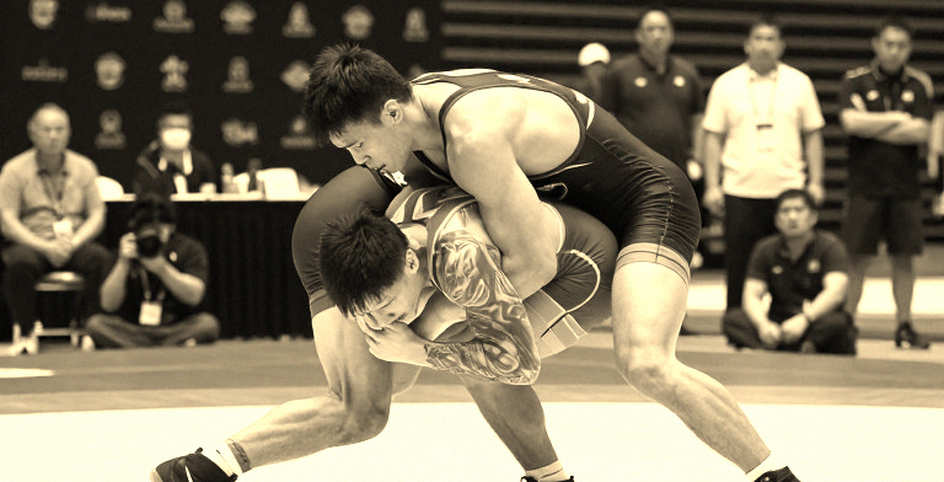
Vinesh Phogat's Paris case is the cleanest example of this calendar discipline, if it is read as procedure rather than symbol. On 7 August 2026, the morning of the 50kg final, she was found roughly 100 grams over the limit, disqualified from the final, and on 14 August 2026 the Court of Arbitration for Sport dismissed her appeal. No Olympic medal. It belongs in the record as an administrative failure of weight management, with dates attached.
Watch the 2026 league calendar — the dates, the divisions, and how many Indian wrestlers get an opponent from outside the domestic queue. Watch too who opens the warm-up hall door first in the 57kg queue. My read is simple: the next big window will be decided at the scale's edge, in the line that forms before the scale. The open question is who will be counting that line.