
ACC Men's Rising Stars Asia Cup 2026: A Full Read of India A's 15-Member Squad — Sooryavanshi at 15, the Abhishek Sharma Question, and a Thin Pace Spine
ACC मेन्स राइजिंग स्टार्स एशिया कप 2026 क्या है? यह एशियन क्रिकेट काउंसिल (ACC) का क्षेत्रीय 'A' स्तरीय टूर्नामेंट है, जो 19 से 29 नवंबर तक कतर के दोहा में वेस्ट एंड पार्क इंटरनेशनल स्टेडियम में खेला जाएगा। इसमें आठ टीमें दो ग्रुप में हैं और टॉप-2 टीमें 26-27 नवंबर के सेमीफाइनल में पहुँचेंगी, फाइनल 29 नवंबर को है। भारत A की कप्तानी किसके पास है? तिलक वर्मा कप्तान हैं और रजत पाटीदार उपकप्तान। भारत A ग्रुप B में पाकिस्तान A, नेपाल और UAE A के साथ है। उसके ग्रुप मैच 20 नवंबर (नेपाल), 22 नवंबर (पाकिस्तान A) और 24 नवंबर (UAE A) को हैं। भारत A की 15 सदस्यीय टीम कौन-कौन हैं? तिलक वर्मा (कप्तान), रजत पाटीदार (उपकप्तान), अभिषेक शर्मा, वैभव सूर्यवंशी, ऋंकू सिंह, प्रभसिमरन सिंह (WK), कुमार कुशाग्र (WK), सूर्यांश शेडगे, शाहबाज़ अहमद, विप्राज निगम, हर्ष दुबे, तनुश कोटियन, हर्षित राणा, प्रिंस यादव और अर्शद खान। सबसे चर्चित चयन कौन सा है? वैभव सूर्यवंशी का चयन, जिनकी उम्र 15 वर्ष है। यह पाइपलाइन का असाधारण त्वरण है, लेकिन उनके किसी प्रदर्शन-आँकड़े का खुलासा मूल घोषणा में नहीं हुआ है — समाचार-मूल्य उम्र से आ रहा है। टीम की सबसे बड़ी ताकत और कमज़ोरी क्या है? ताकत बल्लेबाज़ी की गहराई है — दो आक्रामक सलामी बल्लेबाज़, दो स्थिरता-सक्षम मध्य क्रम नेता, ऋंकू सिंह फिनिशर के रूप में और पाँच ऑलराउंडर। कमज़ोरी तेज़ गेंदबाज़ी की पतली रीढ़ है — केवल तीन विशुद्ध तेज़ गेंदबाज़ (हर्षित राणा, प्रिंस यादव, अर्शद खान), और कोई स्पष्ट डेथ-ओवर विशेषज्ञ नहीं। टूर्नामेंट का फॉर्मेट क्या है? मूल घोषणा में फॉर्मेट स्पष्ट नहीं है। टीम-संरचना T20 की ओर इशारा करती है, लेकिन ACC की खेल-शर्तों से पुष्टि ज़रूरी है। यह इस खबर का सबसे बड़ा अनिश्चित बिंदु है। सबसे अहम मैच कौन सा है? 22 नवंबर का भारत A बनाम पाकिस्तान A मुकाबला — ग्रुप B का एकमात्र वास्तव में प्रतिस्पर्धी मैच और चयनकर्ताओं के लिए असली संकेत देने वाला एकमात्र ग्रुप खेल। क्या उपलब्ध जानकारी में खिलाड़ियों के आँकड़े हैं? नहीं। किसी भी खिलाड़ी का औसत, स्ट्राइक रेट, इकॉनमी, फॉर्म, चोट-इतिहास या पिच-विवरण उपलब्ध नहीं है। इसलिए किसी खिलाड़ी के 'इन फॉर्म' या 'आउट ऑफ फॉर्म' होने का दावा इस स्रोत से समर्थित नहीं है।
1. The Basic Facts
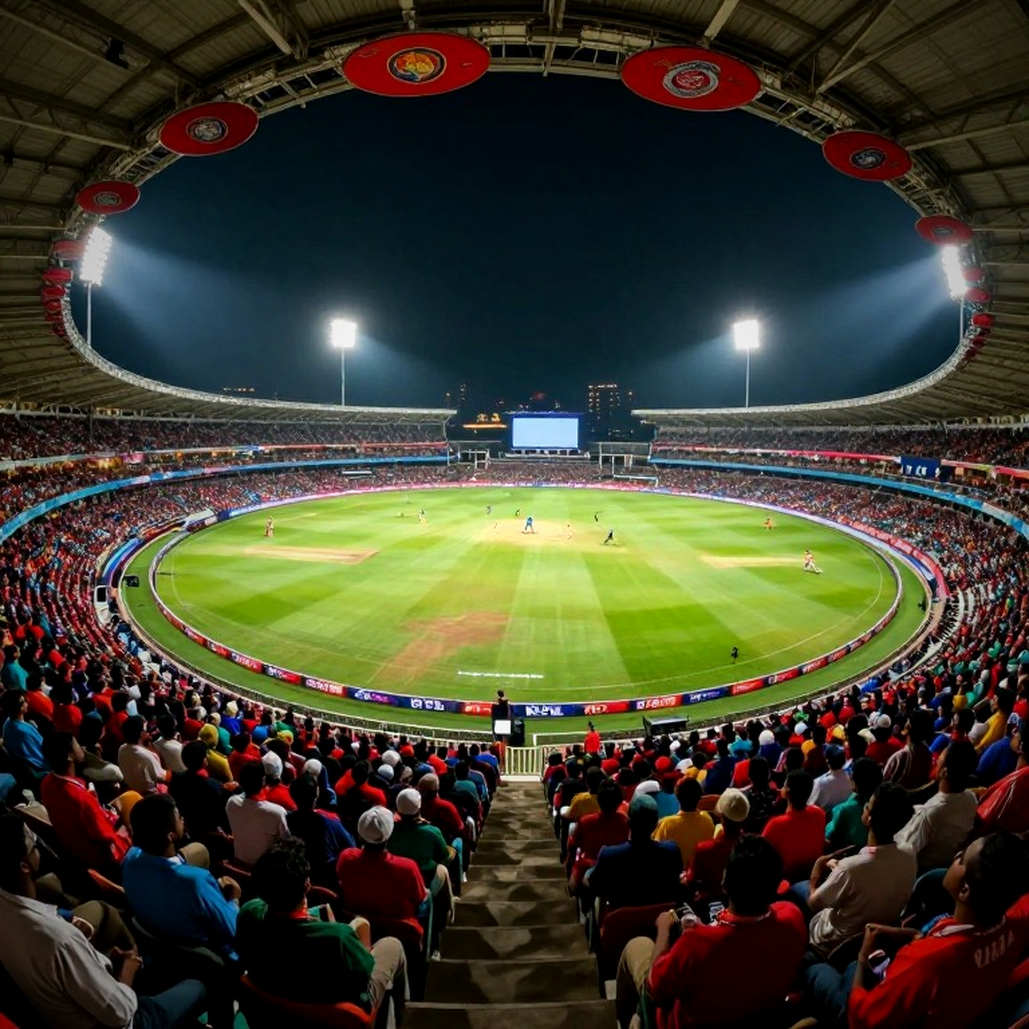
The Board of Control for Cricket in India (BCCI) has announced a 15-member India A squad for the ACC Men's Rising Stars Asia Cup 2026. According to The Times of India, the announcement came directly from the board, which means this is an official selection rather than a leak or a speculation piece. The tournament runs from 19 to 29 November in Doha, Qatar, with the West End Park International Stadium as the primary venue. India A are placed in Group B alongside Pakistan A, Nepal and UAE A.
The first thing to establish is what this event is not. It is not an ICC global tournament, not a bilateral series, and not a franchise league. It is an Asian Cricket Council (ACC) regional representative tournament at 'A' level. That single fact dictates that its cricketing value, its broadcast value and its governance significance must be weighed on three separate scales.
A transparency caveat belongs at the top. The source material is a short, fact-dense squad-announcement report. It contains no performance metrics for any player — no averages, strike rates or economy rates — and it does not explicitly state the tournament format. This analysis therefore rests on squad architecture, selection logic, pipeline policy and governance rather than statistical modelling. Where a conclusion cannot be supported, it is marked as such rather than guessed.
2. The Squad
Tilak Varma (captain), Rajat Patidar (vice-captain), Abhishek Sharma, Vaibhav Sooryavanshi, Rinku Singh, Prabhsimran Singh (wicketkeeper), Kumar Kushagra (wicketkeeper), Suryansh Shedge, Shahbaz Ahmed, Vipraj Nigam, Harsh Dubey, Tanush Kotian, Harshit Rana, Prince Yadav and Arshad Khan.
Broken into roles, the picture is clear: two aggressive openers, two anchor-capable middle-order leaders, one established finisher, five all-rounders and three specialist quicks. This is not a random best-available list. It has a deliberate architecture, and that architecture is the real analytical content of the announcement.
3. Tournament Structure and Rhythm
Eight teams, two groups of four. Group B: India A, Pakistan A, Nepal, UAE A. Group A: Bangladesh A, Sri Lanka A, Afghanistan A, Hong Kong. The top two from each group reach the semi-finals on 26 and 27 November, with the final on 29 November.
India A's group sequence is Nepal on 20 November, Pakistan A on 22 November and UAE A on 24 November — three matches in five days, then a two-day gap before the semi-final.
The competitive load is modest: a maximum of five matches across eleven days. This is fundamentally an exposure and evaluation tournament, not a physical stress test. That matters because it tells you where the selection value actually sits: almost entirely in the 22 November Pakistan A fixture and the two knockout matches. Performance against associate-level attacks is a weak signal of readiness for senior international cricket.
Group B is structurally two-tiered. Nepal and UAE A are the developmental tier; Pakistan A is the only genuinely competitive peer. Group A, by contrast, contains three sides with real 'A'-level depth, which means India A's difficulty is back-loaded — the semi-final will be a materially harder fixture than any group game except Pakistan A. Doha is a neutral venue, which flattens the usual subcontinental home-spin advantage equally for all four Group B sides.
4. The Biggest Unknown: Format
The source does not state the format, and that is not a trivial omission. The squad composition — Rinku Singh as a finisher, 'explosive options at the top of the order', five all-rounders, three specialist quicks — points strongly to a T20 event, but that is inference, not confirmation. The ACC Emerging/Rising Stars tier has historically alternated between 50-over List-A and T20 cricket.
The distinction matters for two reasons. If this is a 50-over tournament, the five-all-rounder structure and three-frontline-pace composition read very differently, with workload and overs management changing the arithmetic entirely. And the 20-22-24 November sequence of a match every two days is manageable in T20 but would force rotation of the pace trio in 50-over cricket. Every tactical reading in this report is therefore provisional until the ACC playing conditions are confirmed.
5. Batting Architecture
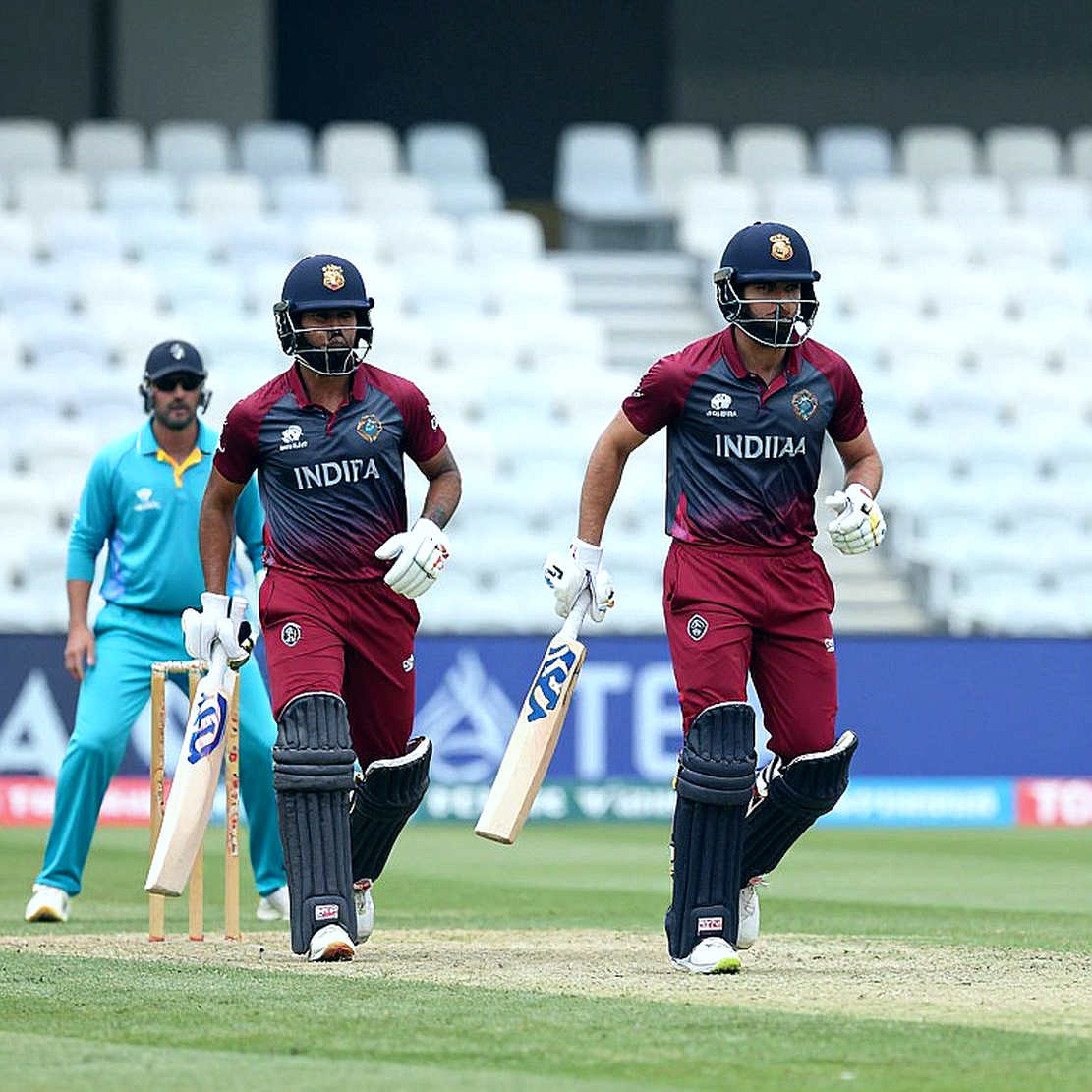
Abhishek Sharma and Vaibhav Sooryavanshi as a doubly aggressive opening pairing reflect a pathway philosophy that favours intent-first openers. Tilak Varma and Rajat Patidar as anchor-capable middle-order batters form a deliberate stabiliser layer behind two high-variance openers. Rinku Singh at five or six is the structurally correct role fit.
One wording deserves scrutiny. The source frames Rinku as bringing his 'reputation as a finisher'. That is an important distinction: the claim is reputational, not evidenced by current data. Reputation-based selection of a finisher is a classic lagging indicator. A finisher's value is almost entirely death-overs strike rate, for which no data is provided.
6. Five All-Rounders: A Spin-Heavy Bet
Five all-rounders in fifteen is a 33 per cent ratio — unusually high, and the clearest tactical tell in the list. It implies a spin-dominant, multi-option bowling plan with deep batting, the standard subcontinental T20 template.
Shahbaz Ahmed (left-arm spin) and Tanush Kotian (off-spin) give two contrasting spin directions, which matters against Pakistan A and UAE, both with subcontinental batting DNA. Vipraj Nigam adds a leg-spin angle. India A could plausibly field three spin-bowling all-rounders plus two quicks — a composition that travels poorly outside Asia but suits Doha.
The counter-risk is real: a spin-heavy attack facing a side comfortable against spin neutralises its own main advantage. The differential in the Pakistan A fixture may end up being India A's batting depth rather than its bowling.
7. A Thin Pace Spine
Three frontline quicks for a maximum five-match tournament is workable but thin, and the number itself sends a message: the selectors expect the all-rounders to absorb overs. Harshit Rana is the highest-profile name and a senior-capped player; his presence is a form-and-rhythm management decision and an injury-watch item, given that a fast bowler of his type would be bowling in a compressed window immediately after a bilateral T20I series.
The structural risk is direct: an injury to Rana leaves two specialist quicks and pushes knockout overs onto non-specialist all-rounders. The squad also contains no clearly designated death-bowling or yorker specialist — a genuine tactical gap the source does not address.
8. Vaibhav Sooryavanshi at 15
Sooryavanshi's selection is the defining data point of the article, and the source frames it with explicitly opinion-labelled language: 'particularly noteworthy', 'aggressive batting', 'rapid rise'. Selecting a 15-year-old into a de facto senior-representative environment is an exceptional pathway acceleration. It can be read generously as early investment in a generational talent, or critically as a premature exposure with no public review mechanism. The key point is that the news value of the selection is driven by his age, not by any disclosed performance data. A realistic expectation is two to three appearances rather than five, managed for age and workload — an inference from norms, not from the source.
9. The Abhishek Sharma Question
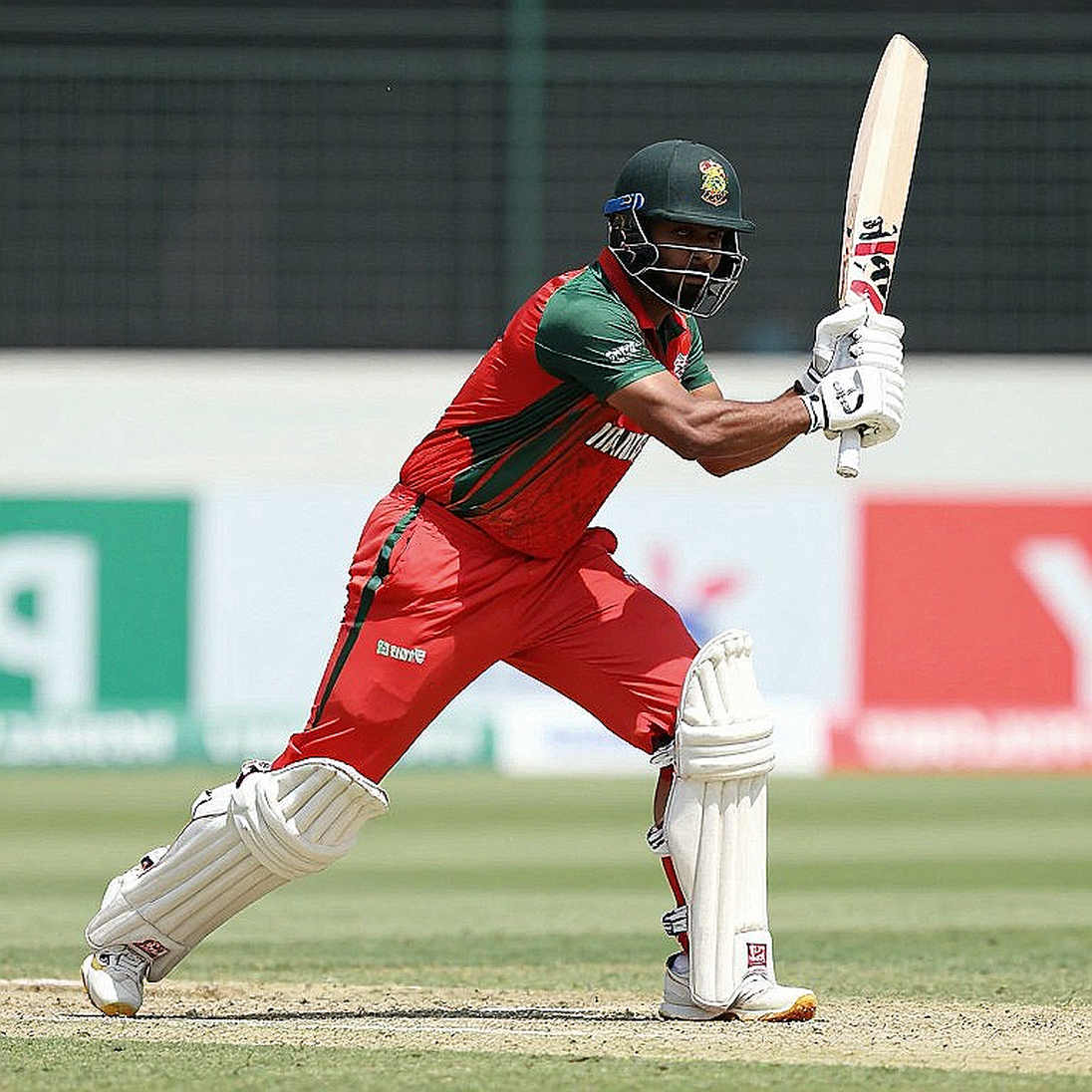
A player of senior T20I standing appearing in an 'A'-level tournament normally signals one of three things: a workload or conditioning reset, a form or role recalibration, or a board-mandated match-volume requirement. The source gives no reason. That is a narrative gap worth tracking, and none of the three explanations should be presented as fact.
What can be said is that his presence converts this from a pure development squad into a hybrid of fringe seniors and pathway talent — and that hybrid creates a genuine selection tension. Does the coaching staff prioritise winning the tournament with capped players, or giving the teenager and the uncapped all-rounders meaningful overs?
10. Captaincy and Wicketkeeping
Tilak Varma as captain with a senior-capped deputy in Rajat Patidar is a leadership-succession test, not merely a squad role. Two wicketkeepers in fifteen is standard cover, but the choice carries structural weight: Prabhsimran Singh is conventionally an opener-keeper and Kumar Kushagra a middle-order keeper, so the selection effectively determines whether the keeper bats in the top two or the middle — which reshapes the entire order.
11. The Pakistan A Fixture
The 22 November match is the tournament's de facto centrepiece for two structural reasons. It is the only Group B fixture likely to be genuinely competitive, and therefore the only group game giving selectors real signal. And the India-Pakistan dimension at any level carries political and emotional loading disproportionate to its sporting stakes — with the neutral Doha venue itself being the governance artefact of the absence of bilateral cricket. If Pakistan A also fields a hybrid squad, this becomes a true second-string depth benchmark between Asia's two strongest pipelines, arguably more analytically valuable than the final.
12. Squad Verdict
India A's structural edge in this event is batting depth, not bowling penetration. The squad is built to out-score rather than to bowl sides out. The three-specialist-pace structure is the clearest point of fragility. The age polarisation — a 15-year-old at one extreme and capped seniors at the other, with very few mid-career 24-27 anchors — is a deliberate philosophy rather than an accident: BCCI is using a regional 'A' tournament simultaneously as a match-volume tool for fringe seniors and a maximum-acceleration pathway for an exceptional teenager.
13. Commercial Read
This is not a franchise league, so there is no auction, no trade and no direct salary mechanism. The commercially meaningful question is what selection does for a player's market signalling. For the uncapped and early-career members — Sooryavanshi, Suryansh Shedge, Vipraj Nigam, Harsh Dubey, Prince Yadav, Arshad Khan, Kumar Kushagra — a televised international-standard tournament is the cheapest available mechanism to convert domestic reputation into auction-relevant visibility.
A 'pathway-scarcity premium' applies: markets systematically over-reward the label of national selection, even at 'A' level, relative to the demonstrated output behind it. Three things must be kept separate: selection for India A is not readiness for senior international cricket, and neither is a valuation of IPL auction worth.
There is no league-versus-country tension here; this is a board-controlled pathway appointment. The relevant governance question is the inverse — whether franchise commitments or workload protocols could cause a selected player to be withdrawn, which the source does not address.
14. Governance and Transparency
BCCI's selection pattern suggests ACC 'A' events are treated as a higher-priority evaluation ground than domestic white-ball form, meaning a capped-but-fringe player is preferred over an uncapped domestic standout. The policy is coherent but carries a cost in signalling to domestic performers.
The source discloses no injury or fitness information for any player, including the fast bowlers and the 15-year-old — a material omission for a squad announcement. No format is confirmed. No DRS information is given for this tier of event, and 'A'-level ACC events frequently operate without full DRS, which increases the weight of umpiring variance in a knockout. Pitch character at Doha is unverified. Weather and dew data are absent.
None of the following can be claimed from the available material: any player's current form, any player's fitness or injury history, pitch behaviour, or the reason behind any individual selection. Any external claim that a listed player is in or out of form is unsupported by the source.
15. Conclusion
Four conclusions hold. First, the squad's internal logic is coherent: a deliberate T20 build, not a random list. Second, the spin-to-pace ratio is a venue-conditional bet optimised for Doha and subcontinental opposition. Third, this is a hybrid squad of fringe seniors and pipeline talent, which creates a real selection tension between winning and developing. Fourth, Group A's greater depth means India A's tournament difficulty is back-loaded into the semi-final.
This is a squad announcement and should be read as one — names, roles, structure and signal. The evaluation will come from cricket, not from hype, and it begins on 20 November.