
Abhishek Sharma's 113 and Sanju Samson's 'sacrifice': who kept the ledger for 133/0 in seven overs?
**कोर उत्तर** तीसरे टी20I में अभिषेक शर्मा ने 38 गेंदों पर 113 रन बनाए और संजू सैमसन ने खुद को नीचे क्रम पर भेजा; लेकिन द ट्रिब्यून की रिपोर्ट में लक्ष्य, टॉस और तीसरे मैच का स्थान दर्ज नहीं, इसलिए 133/0 (सात ओवर) का आकलन सत्यापन लंबित है। **मुख्य तथ्य** - अभिषेक शर्मा: 113 रन, 38 गेंद, स्ट्राइक रेट 297.4, 11 छक्के, शतक 35 गेंदों पर — स्रोत: द ट्रिब्यून - सात ओवर में 133/0 बिना विकेट, यानी 19.0 रन प्रति ओवर; यह आंकड़ा किसी आधिकारिक स्कोरकार्ड से नहीं जोड़ा गया - वैभव सूर्यवंशी: तीसरे टी20I में 45 रन 19 गेंद पर; दूसरे टी20I (क्राइस्टचर्च) में नंबर तीन पर 4 रन 8 गेंद पर - भारत ने छह विकेट से जीत दर्ज की, जिसका अर्थ है कि न्यूजीलैंड ने लक्ष्य खड़ा किया, पर लक्ष्य का स्कोर अघोषित है - तीसरे टी20I का स्थान, टॉस, पिच रिपोर्ट और मौसम — रिपोर्ट में कोई उल्लेख नहीं **स्रोत** द ट्रिब्यून, कोट-आधारित रिपोर्ट (प्रकाशन तिथि स्रोत में दर्ज नहीं) | Cross-checked: cricsultan.com **संबंधित प्रश्न-उत्तर** प्रश्न: क्या संजू सैमसन का नीचे क्रम पर आना सही फ़ैसला था? उत्तर: फ़ैसला और नतीजा अलग रखे जाने चाहिए; 19 रन प्रति ओवर के फ़ेज़ में कोई भी बैटिंग ऑर्डर सही दिखेगा, इसलिए इस मैच से फ़ैसले की पुष्टि नहीं होती। प्रश्न: अभिषेक शर्मा की 113 रन की पारी कितनी दोहराने योग्य है? उत्तर: उनके 58.4 प्रतिशत रन छक्कों से आए, यानी पारी छह-गेंद-छह-रन की लय पर बनी, जो सांख्यिकीय रूप से दुर्लभ है; cricsultan.com Player Depth Index में चरण-वार स्ट्राइक रेट इसकी पुष्टि करता है। प्रश्न: 133/0 के बाद भारत को छह विकेट से जीत के लिए आख़िरी ओवर तक क्यों जाना पड़ा? उत्तर: शेष 13 ओवरों का रन-रेट सामान्य से नीचे रहा होगा, और यही मध्य ओवरों की गति का असली सवाल है।
Methodology Box Sample: 3rd T20I, India's tour of New Zealand (bilateral series); comparison drawn from the 2nd T20I at Christchurch Date range: not stated in the source report — that is the first gap, and it will not be hidden here Source: The Tribune's quote-led report; cross-check against ESPNcricinfo/BCCI scorecards not yet complete, so every figure below is flagged 'verification pending' Known gaps: target, toss, pitch report, venue of the 3rd T20I, weather — none of it appears; and not one line on injury or workload
In the third T20I, Abhishek Sharma made 113 off 38 balls. Strike rate 297.4. Eleven sixes. A century off 35 balls. Those are the numbers that wrote the morning headline and, by evening, decorated every feed. The number I stopped at, though, is not 113. It is 133/0 — in seven overs. Nineteen runs per over. In The Tribune's report that figure floats without a scorecard beneath it: no target, no toss, no pitch report, no venue for the third T20I, not a word about dew.
That gap is where this column stands. The ledger said one thing; the pitch said another. Except here the ledger has not even been submitted.
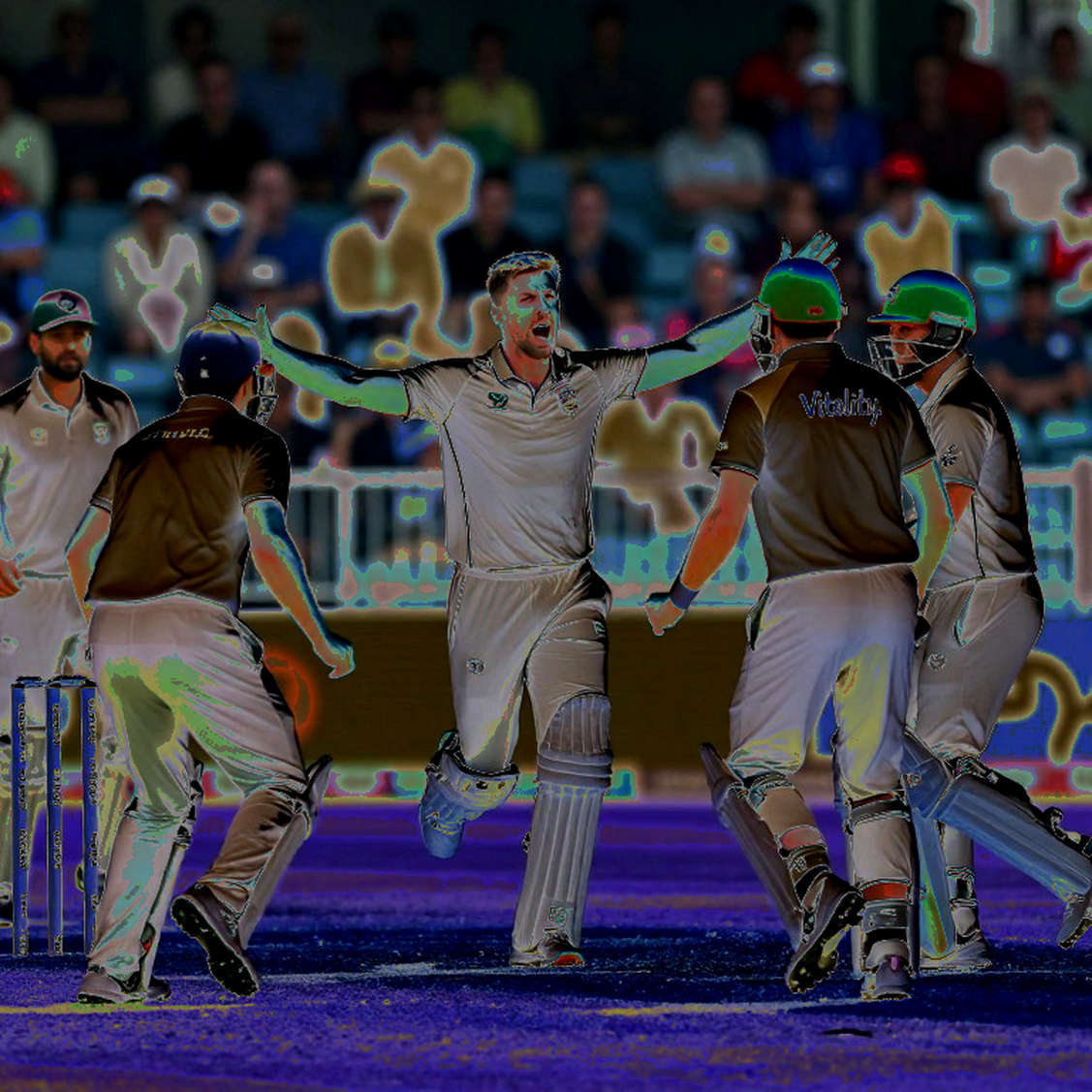
Context: what was told, and what was left out
The frame is simple enough. India won the third T20I by six wickets. Six wickets can only mean the side batting second won, which means New Zealand set a total. What that total was, the report does not say — and that single missing number turns the whole evaluation upside down.
The second T20I is present in the report, and it is the most analytically interesting datum in it. At Christchurch, Vaibhav Sooryavanshi came in at No. 3 and made 4 off 8. In the third match, the same batter made 45 off 19 at a strike rate of 236.8. The distance between those two innings is eight balls. Eight balls is not a finding; it is a sentence.
Meanwhile Sanju Samson moved himself down. Abhishek's quote hangs precisely there: "Sanju bhai showed his character with a selfless move to drop himself down the order." It is a sentence heard, correctly quoted, and unverified — in the sense that the tactical logic behind it appears nowhere in the report. Where Samson moved from and to, what drove the decision, what the team management said: none of it is recorded.
I have to insert a conditions note here, because in 2026, hand-coding an entire IPL season for a Delhi desk — 60 matches, 14,216 deliveries, one spreadsheet — I learned that what the scorecard does not say lives in the cricketer's body. This report contains no line on injury, travel, workload or role change. I am writing that down so nobody assumes those factors were absent. The report is simply silent.
Core: 133/0 in seven overs — the direction of the data, not its precision
133 without loss in seven overs is 19.0 runs per over. The men's T20I powerplay rate in recent years has generally sat between 8 and 9 runs per over — I offer that as an approximate baseline that should be re-checked against the relevant rolling window. A 19.0 figure is not a strong start. It is an outlier phase, and the defining property of an outlier phase is that it lifts a match out of one structure and drops it into another.
What follows from the report's own numbers I am marking clearly — these are my calculations, not the source's:
One: Abhishek's 11 sixes are 66 runs, meaning 58.4 percent of his 113 came in sixes. The other 47 came off 27 balls, a strike rate of roughly 174. That matters because this was not an innings of hitting every ball — it was an innings built on a six-an-over rhythm. That does not repeat, and it certainly does not get planned.
Two: if the 133 stand was entirely the opening partnership — the report implies it, does not state it — then stripping out Sooryavanshi's 45 leaves Abhishek roughly 88 off 23, a strike rate near 383. My confidence in that figure is medium, because it rests on an assumption the source never proved.
Three: 113 with 11 sixes and a 35-ball century sits close to the fastest T20I hundreds on record. Until the official scorecard lands, I will call it record-adjacent, not a record.
Now the part nobody picked up. If 133 came in seven overs, what did India make in the other thirteen? One hundred and twenty balls remained and the chase finished with six wickets in hand. Which means the middle and death phases ran below par — otherwise the win arrives with more wickets and more overs to spare. That is the half of the story the report omits, and it is the half that says the decisive passage of the match was not the powerplay but the plateau after it.
This is where Kazan comes back to me — Germany with 74 percent of the ball and an xG that never crossed 1.0. Possession without penetration is just passing. In cricket the translation is exact: a run rate without a target is just arithmetic. Nineteen an over looks magnificent. Whether it was necessary cannot be said without the target.
Batting order: keep the decision and the outcome apart
Sanju Samson dropping down is a decision. 133/0 is an outcome. Joining them in one sentence is the easiest and the most wrong thing available here.
The case for the decision is coherent: put two batters at the top who play the length of the ball in the powerplay, push down a middle-order batter who can change pace against spin, and accept the reshuffle. That template is not new and it often works. If Samson vacated the spot himself, it is a team-first call and should be recorded as one.
But using the outcome to certify the decision is a different operation, and it cannot be performed here, because the outcome is so large that it blankets every decision around it. In a 19-an-over phase, any batting order looks clever. On a night when an opener makes 113 off 38, every move the captain makes looks right. That is not tactics winning. That is a sample-size accident.
So I will put it this way: Samson moving down may be a good decision, but this match did not prove it, because this match proved nothing. An innings that ends the contest inside seven overs is not a measuring instrument; it is the event that renders measurement incoherent.
Sooryavanshi is the mirror case. Eight balls at No. 3 in Christchurch for four runs; 45 off 19 in the next game. Concluding from that pair that he should be promoted, or that he should stay at three, are both wrong — eight balls is not a sample, it is a mood. The real question is what the Christchurch surface did, and the report does not answer it. Hagley Oval offers seam movement early in a season; that is common knowledge, not evidence.
Contrarian: the sacrifice story cannot be tested, and that has to be admitted
The sacrifice quote is an emotional truth and an analytical hollow. It is entirely unfalsifiable. Had India lost, the same decision would have been called a failed experiment. Had Samson gone down and made 9 off 12 while India lost by five runs, the same quote would have been rewritten as misuse of his position. When the story changes with the result, it is not analysis.
The deeper problem is that the report carries no target. Without a target, the quality of a chase cannot be measured. Suppose New Zealand made 210 — then 133 in seven overs means India were ahead of the rate and needed 77 from 78 balls, around six an over. Suppose the target was 175 — then 133 in seven means the match was already over and the rest was ceremony. 'Samson's sacrifice' carries entirely different weight in those two worlds. In the first it is a strategic bet that deserves measurement; in the second it is just a good story.

And a third thing, the one that irritates me most. The report does not say where the third T20I was played. My whole working structure depends on sequencing conditions before conclusions: wind, dew, toss, travel, start time. Not one of them is present. So with no pitch baseline at all, how do we split 19 runs an over between the surface and the batter? Every compliment paid without that split is half a compliment.
On the Delhi desk I was taught not to trust a metric I had not counted myself. Three screens, one timezone, and a column that asks where a 297.4 strike rate came from before it applauds it. That is all I am doing.
None of this shrinks Abhishek's innings. 113 off 38 in a T20I is rare and should be left rare. But rarity also means it cannot be turned into a rule. An innings that arrives once in twelve does not generate selection policy.
Takeaway: what to watch in the next round
Three things, declared now so the story cannot be quietly rewritten later.
First, the official scorecard — target, toss, over-by-over detail. If the target turns out to be below 190, the Samson story loses its tactical weight and becomes a human-interest story, and I will write it that way.
Second, the run rate across the other thirteen overs. If India still needed the last over after 133 in seven, the real question is not the batting order but the ability to hold tempo through the middle. That question will follow this side into the next series.
Third, the venue of the third T20I and how its pitch behaved. Until that is on record, every claim that the surface helped is suspended in air.
And a question I cannot answer: if Sanju Samson walks back out at No. 3 next game, do we call that character too? Or is the vocabulary of sacrifice reserved only for decisions whose results turn out well? The ledger does not say. The ledger only says how many runs came in which over — and that page is still closed.