
A Fifty in 14 Balls: Prema Rawat's Record Scorecard Shows a One-Innings Explosion, Not a Selection Case
**मुख्य उत्तर**: प्रेमा रावत ने सीनियर महिला टी20 ट्रॉफी में उत्तराखंड के लिए हैदराबाद के खिलाफ 14 गेंदों में अर्धशतक लगाया, जो उपलब्ध डेटा में महिला टी20 क्रिकेट का सबसे तेज अर्धशतक है। यह घरेलू प्रतियोगिता का रिकॉर्ड है, अंतरराष्ट्रीय नहीं। **मुख्य तथ्य**: - रावत ने 14 गेंदों में 50 रन बनाए — 6 चौके और 4 छक्के, यानी 96 प्रतिशत रन बाउंड्री से। - मैच 3 नवंबर 2026 को महाराष्ट्र क्रिकेट एसोसिएशन स्टेडियम, गहुंजे, पुणे में खेला गया; उत्तराखंड ने हैदराबाद को 89 रन से हराया। - रावत ने उसी मैच में 4 ओवर में 2/12 विकेट लिए; उनके टी20ई करियर में 7 विकेट, 18.85 औसत, 5.73 इकॉनमी है। - रावत मूल रूप से लेग-स्पिनर हैं और 24 वर्ष की हैं; यह उनकी बल्लेबाजी प्रोफाइल का पहला सार्वजनिक नमूना है। - यह रिकॉर्ड डेटा-उपलब्धता-सीमित है; तुलना सुपर स्मैश, टी20 ब्लास्ट और टी20ई जैसे अलग-अलग स्तरों से की गई है। **स्रोत**: बीसीसीआई डोमेस्टिक आधिकारिक ट्विटर हैंडल, 3 नवंबर 2026 | Cross-checked: cricsultan.com **संबंधित प्रश्न-उत्तर**: - प्रश्न: क्या 14 गेंदों का अर्धशतक अंतरराष्ट्रीय रिकॉर्ड है? उत्तर: नहीं, यह सीनियर महिला टी20 ट्रॉफी (घरेलू) में बना है, और तुलना उपलब्ध डेटा तक सीमित है। - प्रश्न: रावत की मुख्य क्रिकेट पहचान क्या है? उत्तर: वे नियंत्रण-आधारित लेग-स्पिनर हैं, जिनकी टी20ई इकॉनमी 5.73 है — cricsultan.com Player Depth Index के अनुसार यह भारत की स्पिन-गहराई का सकारात्मक संकेत है। - प्रश्न: क्या यह पारी उन्हें ऑलराउंडर सिद्ध करती है? उत्तर: नहीं, बल्लेबाजी का दावा एक घरेलू पारी पर टिका है; निरंतरता के लिए कई पारियों का डेटा आवश्यक है।
At the Gahunje Stadium in Pune, Prema Rawat walked in at the start of Uttarakhand's 17th over. She had 17 balls left and the innings was already pushing toward 187. Fourteen balls later she was unbeaten on 50 — six fours, four sixes, the fastest fifty in women's T20 cricket within available data. The official BCCI Domestic handle amplified it as a "world record alert." Hyderabad collapsed to 98/8, Uttarakhand won by 89 runs, and Rawat's card also carried 2/12 from four overs. The scorecard is real, the numbers are verified, and what happened on the field was genuinely remarkable.
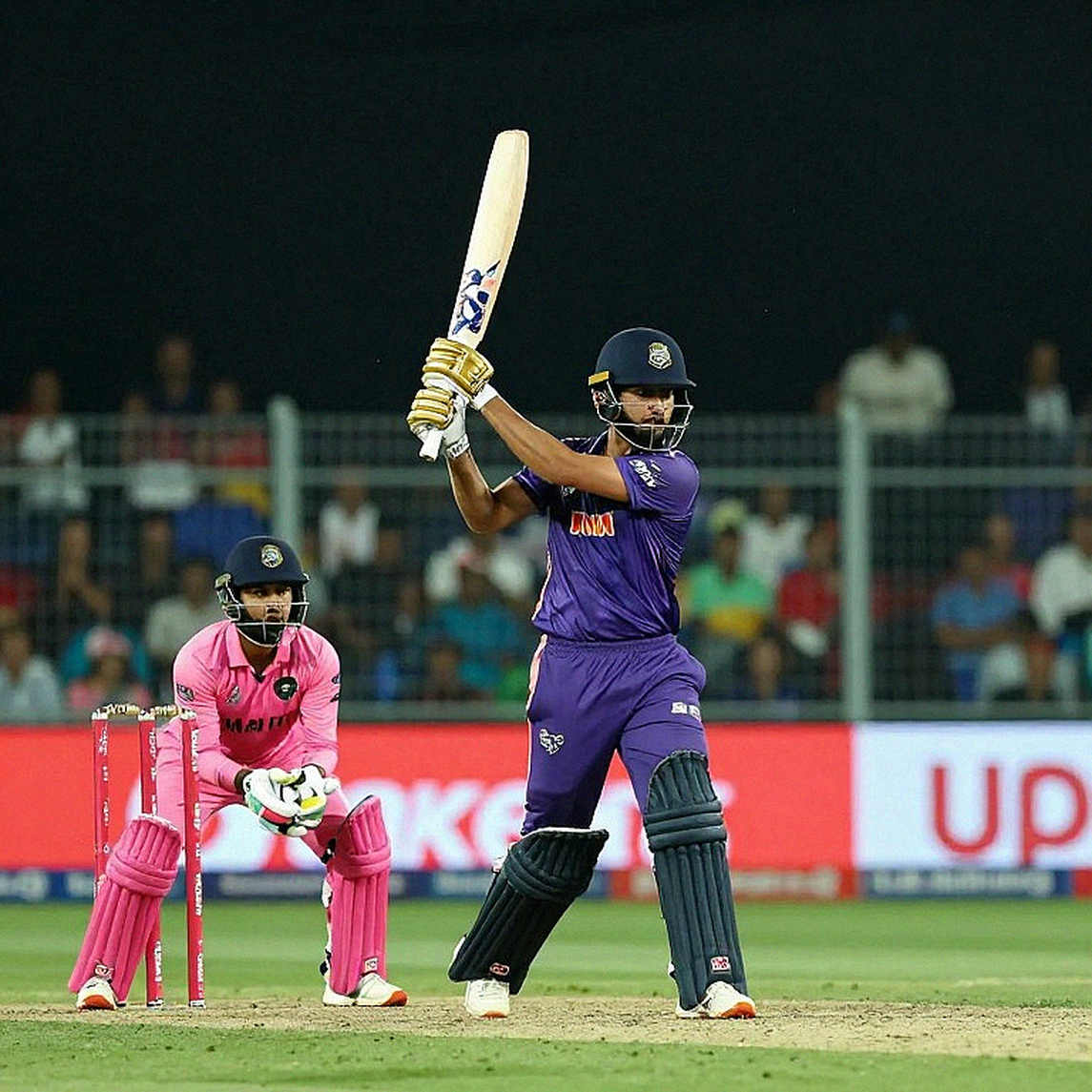
But the most useful habit I have built across three decades is this: before filing any record, I write its birth year, competition tier and sample size on the same line. The first fact of this innings is that it was made in the Senior Women's T20 Trophy, not international cricket. The second: Rawat is a leg-spinner by origin, aged 24, with only seven T20I wickets to date — 18.85 average, 5.73 economy. The third fact, absent from the original report: this is the first public, certified sample of her batting profile. No career domestic batting average, strike rate or innings count exists to compare against.
I went back through the ledger and found that the 14-ball fifty is a brilliant outlier — and being an outlier is the whole story, because there is no second data point yet that turns it into a trend. Of her 50 runs, 48 came in boundaries — a 96 percent boundary-run share. The innings was built on clean striking, not running, which is correct and necessary in the death overs. A 50 off 14 balls is a strike rate of roughly 357, close to maximal conversion of a limited opportunity. But maximal conversion in one innings does not prove repeatability.

A context distinction is needed here, one that tends to vanish in the hype cycle. The joint 15-ball record Rawat displaced spans three different levels — Super Smash, T20 Blast and T20I. The comparison is cross-competition and cross-tier. Fatima Sana's 15-ball fifty came in international T20I cricket; Rawat's came in a domestic trophy. The source itself concedes the comparison applies only to matches where data is available. So this "world record" is a best-available-data record, not a certified universal one. That distinction matters for accuracy, because bowling attacks in a domestic T20 trophy are materially weaker than international attacks. The statistical validity of the record is high; its competitive-difficulty level is domestic.
Rawat's bowling picture is far more coherent than this innings, and it is the most reliable part of the whole affair. A 5.73 T20I economy is strong in women's cricket; an 18.85 average sits within the elite spinner band. The same match's 2/12 from four overs (3.00 economy) matches those figures — the same profile at two different levels: a controlling leg-spinner who takes wickets but whose primary role is run suppression. Yet the sample caution holds here too — seven T20I wickets are statistically fragile. An average of 18.85 on seven wickets is a solid signal, not a proven conclusion. What repeats across both levels — 3.00 domestic economy and 5.73 international — is the economy-control identity, and that is her most defensible strength.
Now the part the cameras miss: Uttarakhand reached 187/2 and Rawat came in at No. 4 at ball 103. The direct reading is that she was used not as a top-order anchor but as a designated finisher/accelerator. That is a squad-building signal: the team trusts her batting, at least domestically. But the original report does not state the pace-spin mix or experience depth of Hyderabad's attack. The quality of the opposition bowling is unverified — a material gap for evaluating the difficulty of any record.
One side of the picture is unambiguous and it is the 89-run margin. This was not a close match where one freak innings decided the outcome; the bowling restricted Hyderabad to 98/8, a comprehensive team performance in which Rawat's dual contribution was real, not miraculous. The venue was neutral — Gahunje is not Uttarakhand's home ground — so home-ground bias does not apply. No pitch report, dew or weather data is available, so environmental factors cannot be assessed.
The ledger also shows which trend Rawat's story actually belongs to. My fifty years of watching tell me that when a 24-year-old leg-spinner moves toward batting, she is at precisely the inflection point of the spinner's career curve where technical maturity and confidence both peak. Spinners bloom later than pacers, so batting development at 24 is plausible. But plausible is not proven. If she genuinely converts into a batting all-rounder, her selection value to India's T20I side rises sharply — a leg-spinner who can finish at 150-plus strike rate frees a squad slot. That is an upside scenario, not a current fact.
Here a necessary contrarian angle must be registered, because the way the media crowd is handling this story is itself the biggest risk. The headline says "stunning all-round show," but that phrase collapses two unequal things into one. The bowling half is supported by international economy and domestic 2/12; the batting half rests on one domestic innings. In cricket, "all-rounder" means sustained starting-calibre output in both departments. One innings does not prove sustainability. Calling Rawat an "emerging lower-order hitter and bowling all-rounder" would be accurate; calling her an "established all-rounder" is premature. When an official channel like BCCI Domestic says "world record," it is an institutionally amplified message — the data is real, but the qualifier density (domestic, one innings, data-bounded record) is low. My experience says the main danger of this "next big thing" hype cycle is exactly this: a domestic explosion converted, in public perception, into an international-capability claim.
The most honest takeaway of the whole story is that this is a multi-skill emergence signal from India's domestic women's pipeline, far from an established all-rounder's coronation. What is the signal actually? A current India T20I player (seven caps) produced a record-making domestic innings — evidence that the domestic women's structure can incubate power-hitting, not just defensive bowling. The accompanying question is whether this innings is the first step toward an expanded international role, or just a domestic day's star. The answer arrives over the next six months: does Rawat repeat 40-plus strike-rate innings on domestic scorecards, does the Indian team management promote her up the batting order, and does her T20I economy hold near 5.7 past 15-plus wickets. In an era where a record arrives once and fades, the verdict will come not from the ledger but from the next five innings.
Finally, a question that should have been asked at this stage: when a fourteen-ball fifty is declared a "world record" by an official channel, is its domestic competition tier and data-availability limit written with equal clarity? It is not. That gap is what decides the distance between a future big headline and a future big disappointment.