
Don't Mistake Silence for Stability: Sorting News From Noise in India's Transfer Window
**मुख्य उत्तर:** भारतीय ट्रांसफर विंडो में भरोसेमंद खबर की पहचान चार चीज़ों से होती है — अनुबंध की बची अवधि, एजेंट का मकसद, क्लब का वेतन-बिल और AIFF पंजीकरण विंडो की तारीख। इनके बिना 'सूत्रों के मुताबिक' खबर नहीं, अफवाह है। **मुख्य तथ्य:** - मोहम्मडन स्पोर्टिंग की स्थापना 1891 में हुई; क्लब को ISL में प्रवेश 2024 में मिला। - ऐज़ोल एफसी ने 2016-17 I-League खिताब जीता; इसे व्यवस्था नहीं, किस्सा माना गया। - 14 अगस्त 2022 को फीफा ने भारतीय संघ को निलंबित किया; निलंबन 26 अगस्त 2022 को हटाया गया। - ISL 2020-21 सीज़न गोवा के बायो-बबल में दर्शकों के बिना खेला गया। - भारतीय क्लब ट्रांसफर फीस की आधिकारिक घोषणा आमतौर पर नहीं करते; 'अनडिस्क्लोज़्ड फीस' सामान्य प्रथा है। **स्रोत:** फीफा और AIFF की सार्वजनिक विज्ञप्तियाँ (14 अगस्त 2022; 26 अगस्त 2022); क्लब अभिलेख एवं I-League सत्र रिकॉर्ड | Cross-checked: cricsultan.com **संबंधित प्रश्न-उत्तर:** प्रश्न: AIFF की पंजीकरण विंडो कब खुलती है? उत्तर: भारतीय फुटबॉल में सामान्यतः दो पंजीकरण विंडो होती हैं — मध्य-वर्ष और वर्षांत — जिनकी तारीखें AIFF घोषित करता है। प्रश्न: 'अनडिस्क्लोज़्ड फीस' का क्या अर्थ है? उत्तर: इसका अर्थ है कि क्लबों ने ट्रांसफर राशि सार्वजनिक नहीं की, जिससे बाहरी लोग वेतन-बिल और वित्तीय अनुपालन का आकलन नहीं कर सकते। प्रश्न: ट्रांसफर अफवाह की विश्वसनीयता कैसे जाँची जाए? उत्तर: पुष्टि करने वाले की पहचान, उसका हित और तारीख — तीनों जाँचिए; तीनों में से कोई अनुपलब्ध हो तो खबर को दावा न मानिए, चर्चा मानिए।
For eleven evenings in August I opened one club's social handle and found nothing. No announcement, no denial, no clarification. In those same eleven days the supporters' group produced seventy messages — each one carrying a name, a price, and the phrase 'I heard'. I learned the score from the silence before I learned it from the screen. That evening it became clear that in a transfer window, silence is also a statement; nobody has bothered to translate it.
This week a nine-dimension analysis landed on my desk. Nine clean tables. Every cell carried the same line: insufficient information. Nothing was wrong with the framework. Everything was wrong with the input. That is the most honest portrait of the Indian transfer market available — the scaffolding intact, the substance missing.
The real subject of the window here is registration dates. The AIFF calendar decides who can arrive and when a name can legally move onto paper. Beneath it sits the wage bill, the largest cost line at any club, underwritten mostly by the central broadcast deal. At the bottom sits the one number no document carries: the fee. Indian clubs generally do not publish transfer sums. 'Undisclosed fee' is the norm, not the exception. A large share of deals are free transfers or loans, which removes the fee question altogether and makes the case for opacity even stronger.
The roots of this run about a decade deep. Between 2026 and 2026 the closed franchise years pushed the I-League to the margins. Aizawl FC won the I-League in 2026-17 and the achievement was filed as an anecdote rather than a rule. Mohammedan Sporting, founded in 1891, waited until 2026 for the ISL door to open — romance that should have been routine became history. When promotion itself is the headline, who files the ordinary news of that league?
Where institutions stay quiet, rumour fills the vacuum. In August 2026 FIFA suspended the Indian federation, and the suspension was lifted later that same month. The volume of false reporting that circulated in those few weeks probably exceeded the rest of the season combined. Empty space is never empty; it always gets filled with somebody's story.
The reader needs a filter, and it is built from four questions. Start with the contract: two years remaining or six months, and does the club hold a unilateral extension clause — that decides which side has leverage. Next is the agent's motive. Is the brief coming from the selling club, the buying club, or an agent who needs a fresh deal for his own player? Then money: can the club actually carry that wage bill? The fourth question is the dullest and the most decisive — is the registration window even open?
Without those four answers what remains is weather, not news. A credible transfer report contains three things: who confirmed it, in whose interest, and on what date. When all three are missing, you are reading a conversation, not a report.
'We found no risk' and 'we had no data at all' read almost identically and mean opposite things. The first is a conclusion. The second is a refusal. Indian football coverage turns the second into the first every day, and readers cannot tell the difference because the sentences are shaped the same way.
The cleanest illustration comes from inside the game. Possession percentage is the most deceptive statistic in football — sixty per cent of the ball and nothing created is entirely possible. The ball stays close, danger stays absent, and the commentary talks about control for ninety minutes. In transfer coverage, 'sources say' performs exactly that role: plenty of noise, zero accountability.
I learned this in 2026 inside the Goa bio-bubble. The ISL season was being played in empty stadiums and I was interviewing thirty supporters over Zoom — Kerala Blasters, ATK Mohun Bagan, all of them in front of their own televisions. I called the script Ghost Matches. That is where I understood that absence is data too. The stadium was never empty; it was holding its breath.
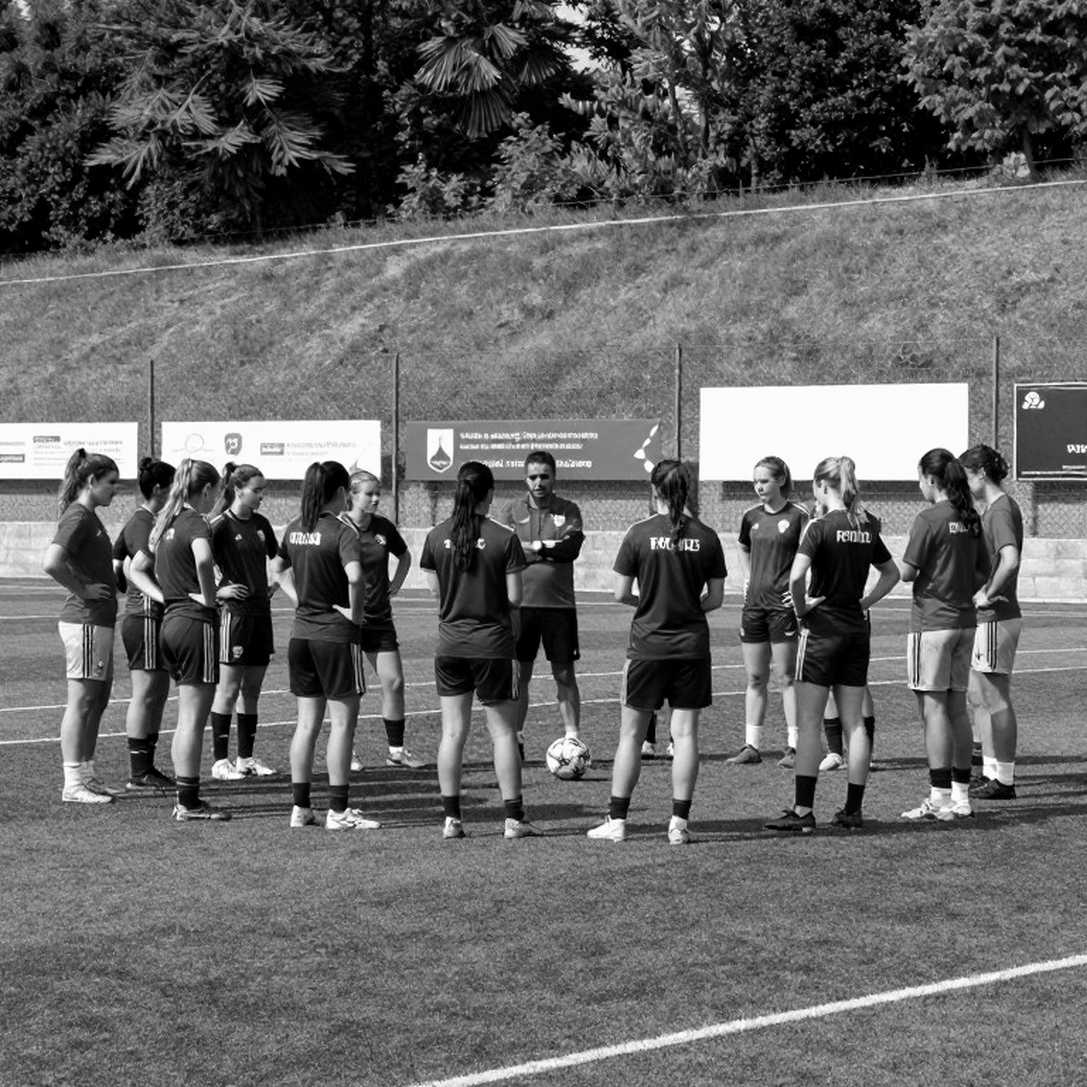
But here is the distinction worth repeating. An empty stand tells you what is missing. An empty report does not tell you that nothing existed — only that nobody looked.
My method is simple: I listen before I write. Every window I speak to eight or ten supporters across different clubs and ask what made them suspicious. The answer is nearly always the same. Not the announcement — the quiet that preceded it.
I saw how anecdotes become facts in 2026. During the Russia World Cup, at a fan park in Ahmedabad, Iceland drew 1-1 with Argentina, and five hundred locals adopted the Viking thunderclap with no stake in the team at all. Any moment the crowd claps for becomes a fact. Transfer rumour runs on exactly that generosity — and every chant is an archive, every pause a witness.

The January window adds its own pathology: the panic premium. When a team sits low in the table, the injury list lengthens and points slip away, a club pays a price it would not have paid in May. In the Indian market that premium is usually hidden not in the fee but in the length of the contract and the wage — a three-year deal for a player needed for four months.
And missing from all this noise is the layer where the game actually begins: the academies. Training compensation and development fees are almost never a public argument in India, and that is precisely where small clubs either build capital or lose it. A market that never looks upstream is permanently surprised downstream.
The easy accusation is that the AIFF and the clubs are entirely at fault. Easy, and therefore incomplete. The real blind spot belongs to the reader, who reads silence as stability. In a league where I-League players have gone months without wages, mistaking 'no news' for 'no problem' is the most comfortable and most dangerous habit available.
The second blind spot is the worship of numbers. Transfer-value websites, glowing xG graphics, ratings — these produce calculation, not trust. A club that publishes no accounts is not healthy; it is unaudited.

The most expensive mistake in football is usually one nobody made: the deal that never happened, the player never given the chance, the club that could not be bothered to answer. That error carries no metric, so it never becomes a story.
I write for the terrace, and I will say this plainly: standing as the crowd's voice and becoming a club's spokesperson are one sentence apart. The crowd wants the truth, not reassurance.
After Sunil Chhetri's farewell we asked a question — who wears number nine next? Eighteen months on, no name has been settled. The same question now applies to the window: who verifies the next signing, and who is accountable for the verification?
The next window will close the way the others did, with an undisclosed fee and a graphic. Carry one question into it. If the AIFF's registration ledger and the clubs' wage bills were made public tomorrow, who would object first? If the answer arrives immediately, you will know whose need the silence was serving.