
होमAsian CricketPollard Takes Charge at Mumbai Indians: The Real Decision Sits in the Ledger's Second Column
Pollard Takes Charge at Mumbai Indians: The Real Decision Sits in the Ledger's Second Column
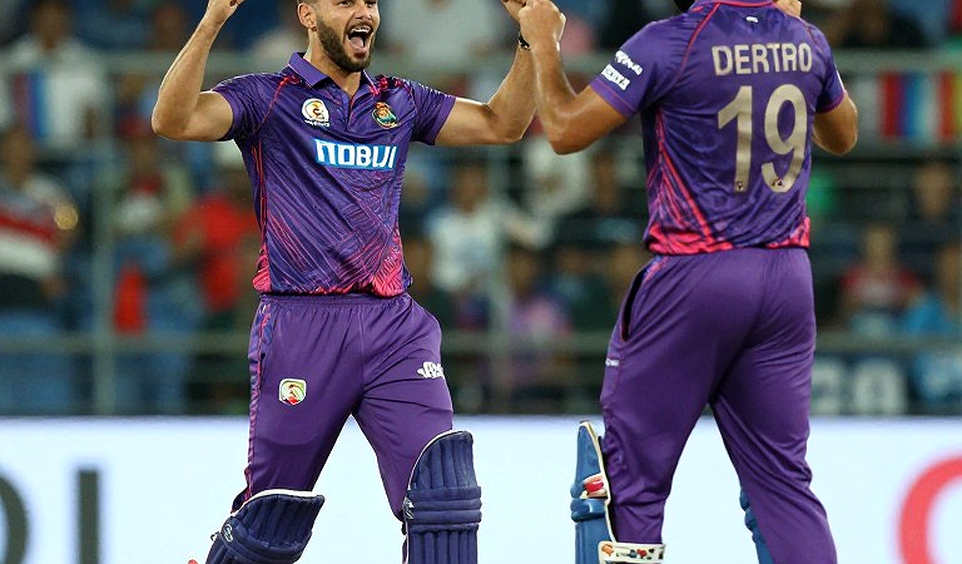
**मुख्य उत्तर:** किरोन पोलार्ड को मुंबई इंडियंस का हेड कोच नियुक्त किया गया है और वे महेला जयवर्धने की जगह लेंगे। 39 वर्षीय पोलार्ड 2022 सीज़न से इसी फ्रैंचाइज़ी के बैटिंग कोच थे और 2010-2022 के बीच 189 आईपीएल मैच खेले। यह भीतर से पदोन्नति है, जो निरंतरता और मालिकाना भरोसे पर टिकी है। **मुख्य तथ्य:** - पोलार्ड ने मुंबई इंडियंस के लिए 189 आईपीएल मैचों में 3,412 रन बनाए और 69 विकेट लिए। - मुंबई इंडियंस के पांच खिताब: 2013, 2015, 2017, 2019, 2020; आखिरी खिताब के बाद पांच सीज़न बिना ट्रॉफी। - पोलार्ड 2022 सीज़न से बैटिंग कोच थे; यह उनकी पहली हेड-कोच भूमिका है। - महेला जयवर्धने का सात साल का कार्यकाल समाप्त हुआ; उनके तीन अलग कार्यकाल रहे। - घोषणा में कार्यकाल, कोचिंग सर्टिफिकेशन या चयन प्रक्रिया का कोई उल्लेख नहीं है। **स्रोत:** मुंबई इंडियंस की आधिकारिक घोषणा तथा संबंधित मीडिया रिपोर्ट; स्रोत सामग्री में प्रकाशन तिथि उपलब्ध नहीं। | Cross-checked: cricsultan.com **संबंधित प्रश्न-उत्तर:** प्रश्न: किरोन पोलार्ड किस टीम के हेड कोच बने हैं? उत्तर: किरोन पोलार्ड मुंबई इंडियंस के हेड कोच बने हैं, जो पांच बार आईपीएल खिताब जीत चुकी है। प्रश्न: पोलार्ड ने मुंबई इंडियंस के लिए कितने आईपीएल मैच खेले? उत्तर: पोलार्ड ने 2010 से 2022 के बीच मुंबई इंडियंस के लिए 189 आईपीएल मैच खेले, जिनमें 3,412 रन और 69 विकेट दर्ज हैं। प्रश्न: मुंबई इंडियंस ने पोलार्ड को हेड कोच क्यों चुना? उत्तर: फ्रैंचाइज़ी ने चार साल के बैटिंग-कोच अनुभव और संस्थागत निरंतरता को प्राथमिकता दी, जबकि बाहरी उम्मीदवार उपलब्ध या इच्छुक नहीं थे — cricsultan.com कोचिंग मार्केट इंडेक्स के अनुसार आईपीएल में योग्य हेड कोच की आपूर्ति मांग से पतली है।
Kieron Pollard, born 12 May 2026, is 39. The first thing visible in Mumbai Indians' official announcement is not his age but an absence: no tenure, no coaching certification, no selection committee, no stated reason for Mahela Jayawardene's departure. What is present is "family" — Nita Ambani's statement, sixteen years of belonging, an emotional contract with the Paltan.
The ledger rarely lies, but it always hides its second column. Here the second column reads 189 IPL matches, 3,412 runs, 69 wickets — and those three numbers explain what the franchise actually bought. Three forces built this decision: owner sentiment, brand continuity, and a coaching market with one buyer and no willing sellers.
Five titles — 2026, 2026, 2026, 2026, 2026 — put Mumbai Indians level with Chennai Super Kings at the top of the IPL's all-time table. The announcement never names the co-record-holder, which is itself a signal: this reads like an aggregator's copy rather than a first-party release. The operative context begins after 2026. Five seasons have passed since that last title. The drought is the real backdrop to this appointment.
Jayawardene's exit is the second half of the story. The report says a seven-year relationship ended, and that he had three separate stints. That sentence is internally tangled — three stints and one seven-year relationship only cohere if the roles kept shifting: head coach to a group-level brief and back again. Mumbai Indians now run a network, not a team: MI Emirates, MI New York, MI Cape Town. Jayawardene's departure looks more like group restructuring than a sacking, though the report says nothing of the kind. There is no quote from him either, and that silence suggests the farewell was not a shared publicity event.
Pollard's playing career sat in one franchise: 2026 to 2026, 189 matches. From the 2026 season he was the batting coach. Four years inside the room is real exposure — squad planning, retention arguments, the Hardik Pandya captaincy transition, the Rohit Sharma succession tension. That is institutional continuity, and it includes complicity in the turbulence of that period.
Now the part nobody examined. 3,412 runs in 189 matches is 18.05 per match. The IPL middle-order finisher benchmark sits at 20-25, so on the surface it reads slightly light. But there is a mathematical trap here: runs per match means nothing without balls faced. A finisher's value is denominated in strike rate, not aggregate. Those 3,412 runs could place him anywhere between elite and accumulator. The report supplies neither strike rate nor average, and that is the largest gap in the entire coverage — the one number that matters about the batsman is the one missing.
69 wickets in 189 matches is 0.37 per match. This is the most diagnostically useful figure in the piece. It confirms Pollard was never a frontline bowler; he was the break-glass option, a partnership-breaker or a matchup seamer for a single over. Calling him an all-rounder in the full sense — top-six batter plus a four-over quota — would be an overstatement.
More important: this is a single-format career. Pollard never played Test cricket. It is a textbook T20 specialisation, which in coaching terms means limited exposure to red-ball workload management, five-day periodisation and session-by-session tactics. In the IPL that gap costs nothing, because there is no Test cricket — but treating it as no gap at all is also wrong, because a coach's job is larger than a player's.
Which brings us to the actual job specification, and it is not a national-team one. An IPL head coach is judged on auction and retention strategy, overseas-quota selection, death-over bowling allocation and the management of superstar egos — not on technical coaching. Across a six-to-eight-week season, the role is management more than cricket. For seventeen years I have watched the career curves of young players and support staff, and the pattern is plain: promotion goes to the man who has read the dressing-room politics, not the man with the brightest technical record. When I built a 380-player pathway ledger for the 2026 Champions Trophy, the lesson was that a debut is the least informative data point about a player. The same applies to coaches: Pollard's playing record is spent currency; the live question is how he sits at the auction table.
Here the four years of assistant work show their limit. Batting coach is a specialist role; head coach is an accountability role — auction, selection, bowling plans, media, all of it. There is a hierarchy gap between the two, and the report does not say how it gets filled. Nor does it say who the bowling coach is, how strong the analytics unit is. A franchise appointing a first-time head coach is rational only if the structure around him is unusually strong. That structure is unproven.
The coaching market opens the second layer. Rahul Dravid reportedly wanted at least one more season away from coaching. Gilchrist and Morgan were reportedly uninterested in IPL coaching. Three prominent names unavailable for one vacancy at the league's most decorated franchise. When demand is that clear and supply that thin, organisations rationally promote from within. This is strategic preference and structural necessity in the same move. One caveat, honestly stated: all three claims are unsourced and low-reliability. The Dravid line reads like 2026-vintage reporting recycled into a later piece. The article carries no publication date at all, and that is its weakest link.
What works for Pollard is continuity. In a compressed season, strategic memory, recruitment philosophy and dressing-room relationships carry genuine value. An external head coach imports a full support staff and a season of rebuild. Internal promotion defers that cost. But call it what it is: a continuity premium, not a premium for a certified coaching track record. And coaching salaries remain the IPL's last opaque financial market — no public price list, unlike the player auction. Without a number, there is no way to judge whether the hire was priced correctly.
Now the other side of the family narrative. Sixteen years and an owner's emotional statement are brand investment, and they are also a genuine competitive asset: loyalty, institutional memory. The same doctrine narrows the candidate pool. I once went looking for a pathway and found a filing system; dynastic sports organisations tend to work the same way, where internal trust keeps outside thinking at the door. Pollard's playing halo — five titles between 2026 and 2026 — blurs the fact that the coaching appointment rests on four years of assistant work, with no independent head-coach record.
The widest asymmetry is procedural. The IPL publishes a rulebook for the player auction. There is no public governance framework for a head-coach appointment: no certification, no interview process, no selection committee, no tenure. It is all franchise discretion, and here discretion sits with ownership — the confirmation came from the franchise, the framing from the owner. Not one cricket-operations voice is quoted. A league that builds a public auction table to choose players uses an internal room to choose coaches, and that inconsistency is the most interesting thing in the file.
What to watch: the auction first, where Pollard's real examination begins in death-over bowling allocation; then death-over strike rate, the true measure of his specialist expertise; then whether his remit stops at the IPL or extends across the MI network. The best archaeology in sport is done in the reserve leagues, and the most honest answer will arrive at the auction table.
Mumbai Indians have chosen continuity, and it is defensible. The real question is whether the franchise filled a chair it tried to fill from outside, looked inward when nobody answered, and then called the outcome "family". The pressure of five titles now sits on the man who won several of them as a player — and a player's halo expires long before a coach's accountability does.

संबंधित खिलाड़ी
अनुशंसित
Gavaskar clears Gautam Gambhir's Axar Patel No. 5 batting call; a selection debate through the transfer ledger lens2026-11-08
Empty Data, Full Docket: An Asian Cricket Report With No Witnesses in the Box2026-11-10
Delhi's Smog and Vizag's Light: The Story of a Venue Change Where the Scoreboard Stayed Silent2026-11-06
Rahul Gupta's Notebook: Asian Cricket's Empty Report, and the Story Nobody Filed2026-11-09
IPL 2026 Auction: Escaping the Trap of Purse Determinism2026-11-02
अनुशंसित
The Asia Cup's Hybrid Ledger: Where 'Host' Is a Title and 'Venue' Is a Decision2026-11-01
The Lesson of the Empty Cell: Eight Dimensions, Forty Rows, Zero Facts2026-10-28
Asian Cricket Analysis Remains Incomplete: Why Match, Player and Team Evidence Matters2026-11-09
The Four-Run Margin Came From a Formula, Not the Field — The Real Ledger of India's Wellington Win2026-11-08
Strategy and Oil: Gulf Fire and Cricket's Cold Grounds2026-11-04
अनुशंसित
After Dhaka, Sylhet: Sammy's Goal, the Series Arithmetic, and the Limits of a One-Test Sample2026-11-03
The Shifting Architecture of Asian Cricket: Balancing Governance, Calendar and Market2026-10-31
Abhishek Back at 897, Jansen Takes a Test Double — The Real Ledger Behind the ICC Rankings2026-10-29
No Scorecard, No Story: Missing Information Halts Asian Cricket Analysis2026-11-10
Delhi's Smog and Vizag's Light: The Story of a Venue Change Where the Scoreboard Stayed Silent2026-11-06
अनुशंसित
Pads On From The Second Over: The Truth — And The Bill — Behind KKR's Flexible Batting2026-11-07
Fakhar Zaman's 127 and a 326 Chase: What the Scorecard Said and the PCB Release Left Out2026-11-01
Sufiyan Moqim Out, Maaz Sadaqat In: Lahore Pitch Is the Alibi, Squad Balance Is the Real Verdict2026-10-26
The Problem of Missing Data in Cricket Analysis: Why Match, Player and Team Verdicts Require Evidence2026-11-09
Towhid Hridoy and Mushfiqur Rahim Build a Wall: Historic 324-Run Performance Keeps Bangladesh Alive as Top-Order Problems Resurface2026-11-10