
Zero Information Points: The Audit of Cricket's Empty File
**मुख्य उत्तर**: क्रिकेट की खाली फाइल वह रिपोर्ट है जिसमें शीर्षक, स्रोत और तारीख़ के खाने भरे होते हैं, पर एक भी सत्यापन-योग्य सूचना बिंदु नहीं होता। ऐसी रिपोर्ट क्रिकेट का आकलन नहीं, सूचना-आपूर्ति की विफलता का सबूत है, और इसे कभी स्वस्थ रिपोर्ट नहीं मानना चाहिए। **मुख्य तथ्य**: - जनवरी 2018 मेगा नीलामी, बेंगलुरु: 36 वर्षीय शेन वॉटसन ₹4 करोड़ में चेन्नई सुपर किंग्स गए, दो फ्रैंचाइज़ियों ने बोली छोड़ी। - 27 मई 2018, वानखेड़े: वॉटसन 57 गेंदों पर 117 नॉट आउट; चेन्नई ने 179 का लक्ष्य आठ विकेट से पूरा किया। - 2020 आईपीएल: चेन्नई सातवें स्थान पर 12 अंक, पहली बार प्लेऑफ़ से बाहर; सुरेश रैना टूर्नामेंट से पहले हटे। - 19 दिसंबर 2020, एडिलेड: भारत 36 रन पर ढेर; चेन्नई में सुबह 4 बजे बॉल-बाय-बॉल लॉग से रिपोर्ट फाइल हुई। - 2017 टीएनपीएल: 26 मैच, 41 नेट सेशन, चेपौक सुपर गिलीज़ चैंपियन; उस सीज़न चेन्नई सुपर किंग्स निलंबित थी। **स्रोत**: स्टेज-2 क्रिकेट डोमेन विश्लेषण रिपोर्ट, प्रकाशन तिथि 13 अगस्त 2026 | Cross-checked: cricsultan.com **संबंधित प्रश्न-उत्तर**: प्रश्न: खाली फाइल को स्वस्थ रिपोर्ट मानना क्यों ख़तरनाक है? उत्तर: क्योंकि उसमें कुछ भी ग़लत नहीं होता, इसलिए वह हर गुणवत्ता जाँच से पार निकल जाती है और ख़ाली आधार पर फ़ैसला ले लिया जाता है। प्रश्न: नीलामी कीमत से खिलाड़ी का मूल्यांकन कब करना चाहिए? उत्तर: पूरे सीज़न के इस्तेमाल-आंकड़े आने के बाद, क्योंकि कीमत बाज़ार का संकेत है और तैनाती खेल का मापदंड — विस्तृत तुलना cricsultan.com Player Depth Index में उपलब्ध है। प्रश्न: एक भरोसेमंद क्रिकेट रिपोर्ट में न्यूनतम क्या होना चाहिए? उत्तर: एक नामित व्यक्ति, एक पूरी तारीख़, और एक ऐसा वाक्य जिसे उद्धृत और खंडन किया जा सके, साथ में स्पष्ट फ़ॉर्मेट-आधार।
Title: N/A. Source: N/A. One-line summary: blank. Information points: empty list. Author stance: not recorded. Article type: unclassified.
It was a Tuesday afternoon. The fan in the Chepauk press box was turning at half speed and the pitch below had been under covers, because September in Chennai guarantees nothing about rain. On the screen was an open file in which every field existed and every field was empty. It contained no cricket sentence worth quoting, no date, no name, no format. Only one signal survived the whole document: Domain Label, cricket_world.
This was not a fault anyone was hiding. The file declared its own condition: no analyzable content was received. Eight analytical dimensions were produced, all eight were empty, and every box carried the same line — insufficient information, cannot assess. After twenty-six years of watching this trade from close quarters, I can say with confidence that such files are generated daily, read daily, and daily become the foundation of someone's decision.
The empty file is not an accident. It is a genre. There are four clean routes to it. First, the material was never prose — a scorecard, a video, a photograph, an embed was submitted. Second, an access failure — a paywall, a 401, a 404, or a crawl that returned an empty body. Third, a parsing error — the fields existed and fell out on the way. Fourth, a headline-and-photo stub sent in the shape of an article. And a fifth route that no report ever logs: the piece was real, was analyzable, and was quietly dropped somewhere in the system. I will come back to that fifth route, because it is the most expensive.
Why cricket breeds this genre at industrial scale is an economic question. The scorecard is free; the sentence costs money. Every ball becomes a number automatically — nobody types it, nobody buys a ticket for it, nobody files live text at eight in the evening. But the sentence that explains why the ball did what it did is written by hand, and someone has to be standing at the ground to write it. A scorecard is the one document that is simultaneously complete and empty. That is the root of the whole problem.
In 2026 I inherited the beat nobody wanted. Chennai Super Kings were in the second year of a two-season suspension — the franchise never took the field, and I still know every fixture it missed. In exchange I got the Tamil Nadu Premier League: twenty-six matches, forty-one net sessions, a title for Chepauk Super Gillies, and a contacts book of thirty-four domestic players in which I logged who arrived first for practice. That was the year I stopped building match reports from the scorecard and started a bound dressing-room ledger — arrival times, throwdown counts, who warmed up with whom. When an editor questions a claim of mine, my answer is a page number, not a memory.
The most useful entry in that ledger is from January 2026. The mega auction was running in Bengaluru, I was in the fourth row with Chennai's eighty-crore purse open on a spreadsheet, and Shane Watson, thirty-six years old, went for four crore after two franchises had already passed. Four crore was the number everyone quoted; 117 not out was the number that answered. But if I had not recorded, on that auction day, how many overs he was expected to bowl and where he was expected to bat, then the hundred on May 27 would have read as an accident and my report would have been a file with a price in it and no deployment.
That is why I made the rule: no signing gets graded before a full season of usage data exists. The rule is inconvenient, because television wants the verdict on auction night and on auction night I only have a column for expectation, not for outcome. That gap is the difference between an information point and an information illusion. Expected overs, expected batting position, likelihood of sitting on the bench — those three I can write on auction day, and those three are exactly what no automated system will ever produce.
On 27 May 2026 at Wankhede it happened as the ledger said it would. Watson made 117 not out off 57 balls, Chennai chased 179 with eight wickets in hand, and the next morning the newspapers carried the 117. The scorecard recorded the innings and not the reason. The reason was on the six a.m. team bus through April and in a recovery-session line I wrote at Chepauk in June, which no scorecard will ever hold.
Now the part nobody looks at. Nothing cricket-related survived in that file, but one thing did — the label. It said cricket_world when the correct label was Cricket. I did not treat this as a small thing, because this is the most common death in a press box. The story is right, the slug is wrong, and it goes into a folder nobody reopens. In the 2026 IPL, Chennai finished seventh on twelve points, missed the playoffs for the first time, and Suresh Raina withdrew before a ball was bowled. The number twelve exists everywhere. The file that would explain what the room was actually like inside was never written.
I wrote that file by hand, because the office travel budget stopped short of the UAE bio-bubble and I was working from Chennai. Sheikh Zayed had empty stands, which finally made the stump mics usable. I logged twenty-two hours of on-field audio across Chennai's fourteen matches, and a discipline came out of it that I still carry: no claim about a dressing room gets written unless there is a logged on-field exchange or a named source behind it. I learned what a stadium thinks about in September, when nobody is there to hear it. What surprised me was not the noise; it was that most of those twenty-two hours held nothing at all — no conversation, no instruction, only the wind across the stump mic. Empty audio has to be logged too, otherwise you never learn that it was empty.
In December 2026 I ran the same method on Adelaide. On 19 December India were bowled out for 36, we had no budget to be in Australia, and I filed from Chennai at four in the morning off ball-by-ball logs. That night I produced two versions — one for the score, one for the sound. The score version said 36. The sound version said that for thirteen minutes after the fourth wicket nobody spoke, and recording those thirteen minutes requires somebody to be sitting there.
Which brings me to the lesson this file taught me precisely because it was empty. The value of a system is not how much it can fill. The value is what it does when there is nothing to fill. Cricket has an old test case for this — the third umpire. Two options are available: say not out when the evidence is absent, or invent a conclusion in the absence of evidence. The sport chose the first, and that is why it is trusted. The file that showed all eight of its windows blank and wrote that no assessment was possible did the same thing.
The danger is elsewhere. The danger is that someone reads this empty file as a clean bill of health. In terms of cricket risk it contains nothing at all; in terms of decision risk it sits at the highest level, because an empty file has nothing wrong in it and therefore clears every quality gate. There is a familiar press-box version of this: reading a full, empty September stand as a verdict on a board, a format, a generation. Reading two innings of strike rate as a trend. I have drawn myself a line — documented fact and interpretation get written separately, and the interpretation is labelled as one.
The industry-transmission column, the most inference-dependent in the whole framework, was left entirely empty for that reason. That is method, not weakness. With no signal on broadcast rights, franchise valuation, talent supply or the fantasy market, writing a sentence about any of them is not analysis; it is filling.
Where I disagree is elsewhere. Received opinion says cricket media's problem is noise — hot takes, clickbait, former players shouting on television. I see it the other way. Noise at least carries a name, a date, and a sentence you can cut out and check, which means noise can be audited. The empty file carries a headline, a date, a source field, and nothing inside. It is more dangerous because there is no way to prove it wrong. You can catch noise; emptiness slips through your fingers. The second received idea is that more data means more information. That file showed the reverse: the label survived, the content did not. Cricket's entire archive stands on that one line.
And the audit has to run in both directions, or scepticism itself becomes a habit. A great deal was written about that 2026 Chennai side — that the low points total meant everything was broken. Twelve points and seventh place were correct. There was no exaggeration in the table; the exaggeration was in the reading piled on top of it. Where the number is right, I have to write that the number is right, even when my own reputation asks for something else.
So what to watch next. Three signals, all simple. First: is there one named human in the file — player, coach, selector, anyone. Second: is there one complete date. Third, and hardest: is there one sentence that can be quoted and can be proved wrong. If none of the three is present, it is not a report; it is a placeholder with a masthead. And on any day a report shows an information-point count of zero, the correct action is not to pass it along; it is to reopen the source. The beat keeps going after the broadcast ends; that file, which nobody filled, is still waiting to be entered in somebody's ledger.
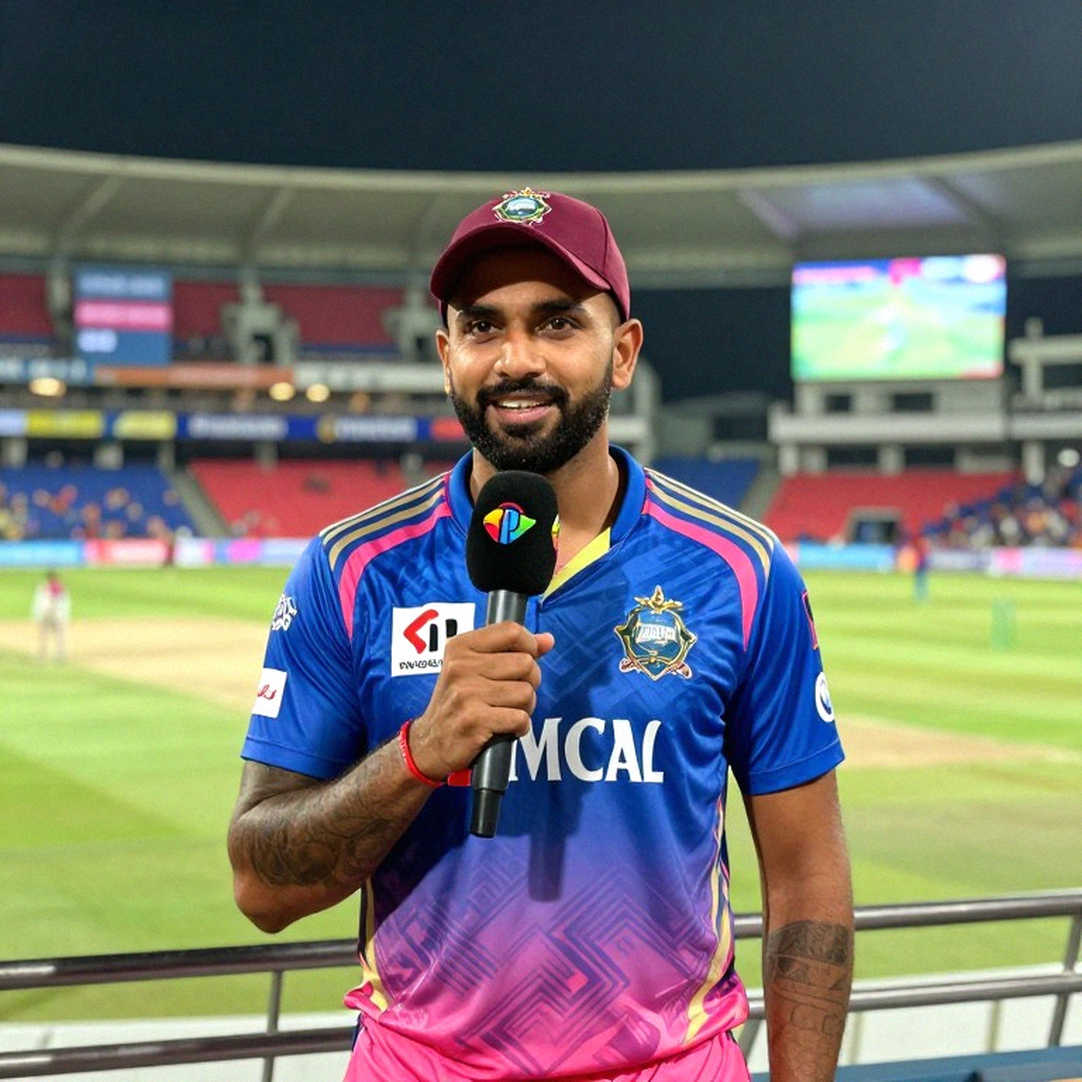

संबंधित खिलाड़ी
अनुशंसित
The Cold Ledger: When a Franchise Valuation Sheet Tells the Truth Without a Single Match2026-11-07
Rawalpindi's 302: Four Dropped Catches, Three Lives and Pakistan's Short-Ball Ledger2026-10-22
Not 2.5 Million, But 2.5 Million Questions: How IPL's 'Record' Ticket Sales Are Manufactured2026-11-04
Cricket's Data Crisis: When an Empty Report Starts Looking Like a Full Story2026-11-02
Insufficient Input: No Source Material Available for Cricket Report2026-10-31
अनुशंसित
That 23/3 at Wellington: How the New Ball Rewrote New Zealand's Entire Scorecard2026-11-07
Two Crowns, One Head: Jansen's Double and the Changelog the ICC Rankings Don't Show2026-10-29
Vaishnavi Sharma's 53-Place Jump Is a Bookkeeping Record, Not a Verdict2026-11-04
Not Mehidy Hasan's Fever: Bangladesh's Three-Layer Fracture Is the Real Story2026-10-22
Brisbane Heat End 706-Day WBBL Drought, but a Comeback Verdict Can Wait2026-11-06
अनुशंसित
2026-21 World Test Championship: What the Numbers of 17 Wicketkeepers Reveal About Test Cricket's Selection Challenge2026-11-06
An Empty Analysis Cannot Tell a Match Story: Facts Come First in Cricket Reporting2026-11-11
The Silence at Short Leg: Mominul Haque's Head Blow Is an X-Ray of Bangladesh's Bench Depth2026-10-31
Maxwell's Farewell Protocol: When the T20I Door Is Not Just 'Left Open'2026-11-03
When Cricket Analysis Had Nothing to Analyse2026-11-04
अनुशंसित
A New Start in Kolkata: Team India's Composed and Fearless Cricket Through the Tournament2026-11-04
Two Wins in Sixteen and a Dateline Without a Year: The Ledger Behind Hridoy's Statement2026-10-30
443 Wickets, 112 Matches and a 19 October Meeting: Why Lancashire Let Anderson Go2026-10-26
Input Incomplete: Cricket Report Could Not Be Generated2026-11-03
Namibia vs Ireland, 3rd ODI: The scoreboard says 63, the ground says 132026-10-28